Fence Staining or Painting: Which Service Should You Request?
Fence staining usually suits homeowners who want visible wood grain and a natural finish, while fence painting suits those who want solid color and stronger visual coverage. PainterIssaquahwa.com compares surface condition, upkeep, preparation, and finish goals so you can request the right service.
Get a Free EstimateFence Staining vs Fence Painting at a Glance
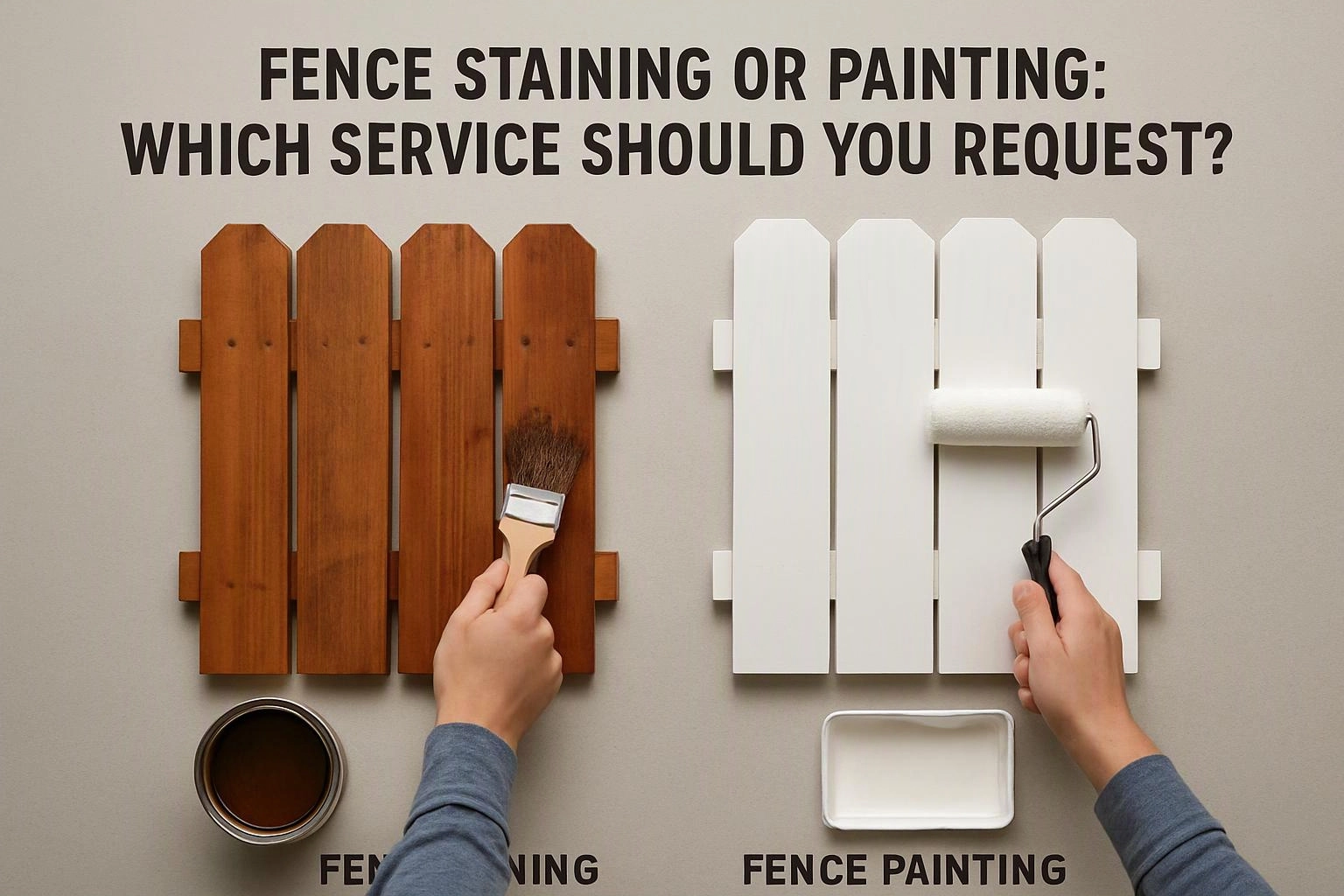
Fence staining preserves a more natural wood look, while fence painting creates a solid, more uniform finish. The better choice depends on the fence condition, desired appearance, preparation needs, and upkeep.
- Fence staining fits wood fences where visible grain and a natural finish matter most.
- Fence painting fits fences that need solid color and broad visual coverage.
| Option / System | Best For | Cost and Upkeep | Preparation and Trade-Offs |
|---|---|---|---|
| Fence staining | Visible wood grain and a natural finish | Cost depends on fence size, wood condition, access, and stain selection. Upkeep focuses on renewing the coating as the wood weathers. | Needs cleaning, mildew removal, repairs, and suitable drying conditions. Stain shows more of the existing wood surface. |
| Fence painting | Solid color and uniform visual coverage | Cost depends on preparation, paint type, primer, access, repairs, and number of coats. Upkeep includes watching for peeling paint. | Needs strong surface preparation and good paint adhesion. Paint hides more of the wood grain and surface variation. |
When Fence Staining Is the Better Choice
Fence staining is the better choice when you want the wood grain to remain visible and the fence to keep a natural appearance.
Fence stain can range from transparent to solid stain. The right product depends on the wood condition, color goal, and desired level of wood protection. Our Fence Staining service focuses on matching the finish to the fence surface.
What Are the Advantages of Fence Staining?
Fence staining offers a natural appearance while helping the coating work with the wood surface. Stain penetration and finish selection affect the final look and maintenance needs.
Staining works best when the boards, posts, rails, and gates have a surface worth showing. Deep damage or uneven old coatings may require repairs or added preparation first.
Best for a Natural Wood Finish
A natural finish is best when the fence has attractive grain and limited surface damage. Transparent stain shows the most grain, while semi-transparent stain adds more color without fully hiding the wood.
We review the boards and existing coating before recommending stain. That check helps prevent a finish that highlights unwanted marks or uneven color.
When Fence Painting Is the Better Choice
Fence painting is the better choice when you want a solid color, a uniform appearance, or more coverage over an older surface.
Fence paint creates a surface film that can cover varied board color and minor visual differences. The wood fence still needs sound boards and careful preparation so the paint can bond well.
What Are the Advantages of Fence Painting?
Fence painting gives homeowners broader color control and stronger visual coverage. The result depends on surface condition, paint adhesion, and the coating system.
Painting requires more attention to peeling paint, old coatings, and damaged wood. Poor preparation can cause early coating failure.
Best for a Bold, Uniform Color
Opaque paint is best for homeowners who want a bold, uniform finish with strong visual coverage. Paint hides more wood grain than transparent or semi-transparent stain.
We check whether the existing surface can support paint before choosing the fence color. That decision protects the finish from problems caused by weak adhesion or loose coating.
Can a Fence Be Painted Instead of Stained?
Yes, a fence can be painted instead of stained when the surface is sound and properly prepared. Existing stain, peeling paint, dirt, moisture, and damaged wood can affect the result.
A stained fence may need cleaning and light surface preparation before painting. A painted fence may need a paint stripping service when loose or incompatible coating prevents paint adhesion.
What Preparation Does Each Fence Finish Need?
Fence prep starts with checking the wood and existing surface coating. Our team uses the inspection findings to match cleaning, repairs, primer, and finish selection to the fence.
What Changes the Cost of Fence Staining or Painting?
Fence staining or painting costs depend on fence size, wood condition, access, preparation, repairs, coating type, and the number of coats. We review those job details before preparing an estimate, and Free Estimates Available.
Fence length and height affect material use and work access. Cleaning, paint stripping service, primer, repairs, and finish selection can also change the scope. We explain what the estimate includes so you can compare the service decision clearly.
How Should You Choose Between Staining and Painting?
Choose staining for visible wood grain and a natural look. Choose painting for solid color, stronger visual coverage, and a more uniform finish.
Look at the fence appearance, wood condition, maintenance preference, and long-term finish goal. A natural surface may suit stain, while an older or visually uneven surface may suit paint after careful preparation.
How We Evaluate a Fence Before Finishing It
We evaluate the fence condition, existing coating, surface preparation needs, and desired appearance before recommending a finish.
Our team checks the wood fence from the boards to the posts, rails, and gates. We then explain whether fence staining or fence painting better fits the surface and your finish goals.
PainterIssaquahwa.com uses that review to plan cleaning, mildew removal, paint stripping, fence repairs, primer, and the selected number of coats. We provide a clear recommendation before the work begins.
Questions About Fence Staining or Painting
Does fence stain last longer than paint?
Fence stain does not always last longer than paint because service life depends on wood condition, exposure, preparation, coating type, and maintenance. We assess those factors before recommending a finish.
Is staining or painting better for an older wood fence?
Painting can be better for an older wood fence when solid coverage is needed and the surface can support paint. Staining can be better when the boards remain attractive and the wood grain should stay visible.
Can you stain a previously painted fence?
Yes, a previously painted fence can be stained when the paint is removed or sufficiently prepared and the wood can accept stain. Existing coating condition determines the needed preparation.
Should a fence be cleaned before staining or painting?
Yes, a fence should be cleaned before staining or painting because dirt, mildew, and loose coating can weaken the finish. We check the surface after cleaning before applying the selected coating.
Does fence paint hide wood grain?
Yes, opaque fence paint hides more wood grain than transparent or semi-transparent stain. Paint creates stronger color coverage and a more uniform appearance.