Deck Staining or Painting: Compare the Finish Before You Hire
Deck staining preserves more of the wood’s natural look, while deck painting creates a more uniform, opaque finish. PainterIssaquahwa.com compares surface condition, desired appearance, upkeep, and preparation so you can choose the right finish.
Get a Free EstimateDeck Staining and Deck Painting Solve Different Finish Goals
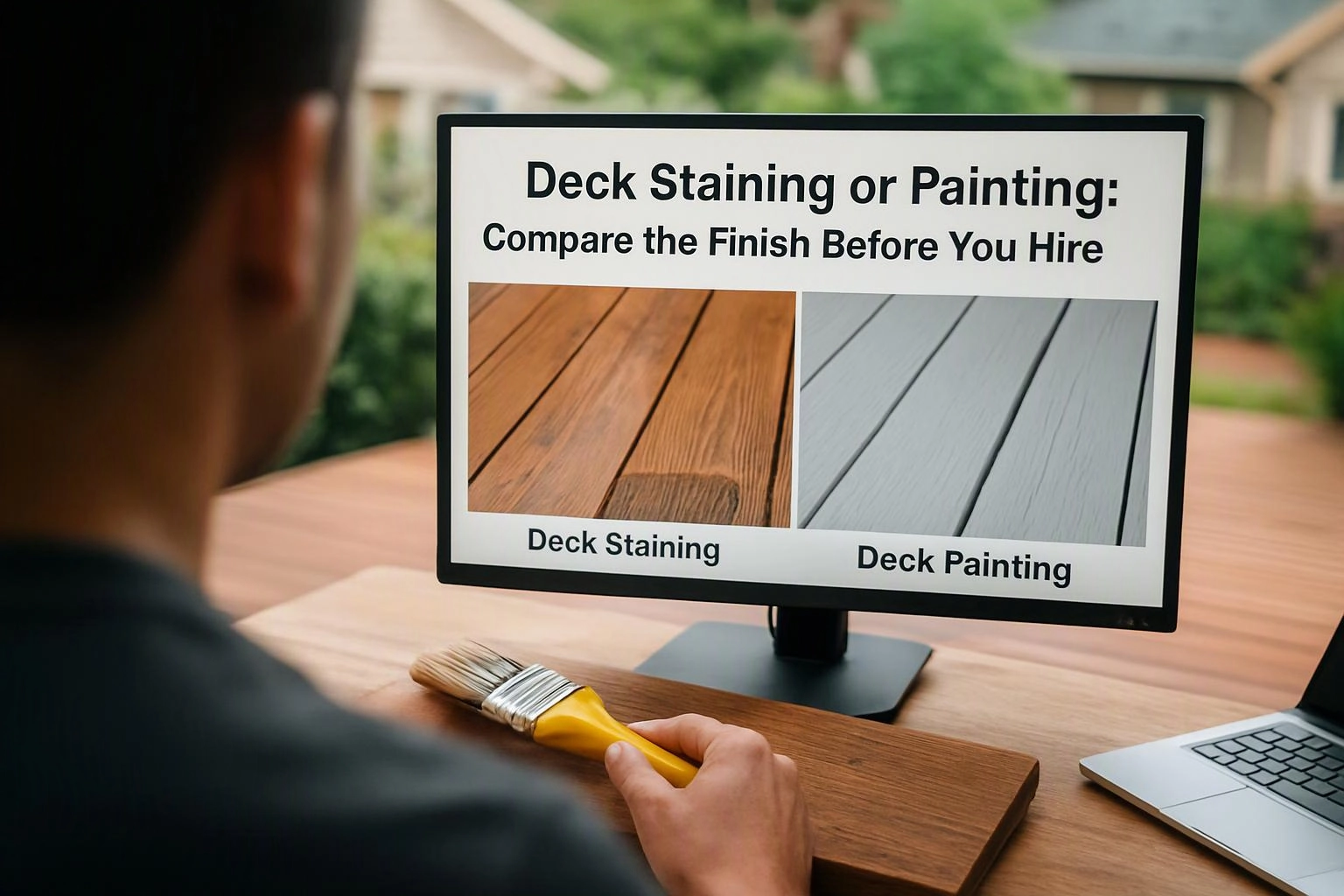
Deck staining is an exterior wood finishing method that colors the boards while keeping more wood character visible. Transparent and semi-transparent products allow the wood grain to show through. Solid-color stain offers more coverage while retaining some surface texture.
Deck painting creates a more opaque finish that covers much of the original wood appearance. Paint can bring stronger color uniformity to weathered boards, railings, stairs, posts, and handrails.
Both options can support surface protection when the deck surface preparation is thorough. The right choice depends on wood condition, moisture exposure, desired color, and future maintenance needs.
Deck Staining vs Deck Painting at a Glance
Deck stain and deck paint serve different finish goals. The table below compares the main cost drivers, project timeline factors, maintenance needs, and best-use conditions.
At PainterIssaquahwa.com, we review the surface before recommending a finish. Our team explains the estimate scope so you can see which preparation steps affect the work.
| Factor | Deck Stain | Deck Paint |
|---|---|---|
| Appearance | Shows more wood grain and natural texture | Creates an opaque, uniform color |
| Cost drivers | Deck size, cleaning, repairs, sanding, and product choice | Deck size, coating removal, repairs, paint adhesion, and product choice |
| Project timeline | Depends on surface preparation and drying conditions | May require added preparation when old paint is peeling |
| Maintenance | Often centers on cleaning and renewing the stain | Often centers on watching for peeling, cracking, and wear |
| Best-use conditions | Sound wood where natural character matters | Weathered wood where color coverage matters |
- Deck stain: Best for visible wood grain and a natural wood look.
- Deck paint: Best for opaque color and stronger visual coverage.
When Deck Staining Is the Better Fit
Deck staining is the better fit when the boards have useful wood character and you want that texture to remain visible.
Our team can explain the differences between a transparent stain, semi-transparent stain, and solid-color stain during a deck staining service estimate.
Best for: Homeowners who want visible wood character and a less opaque finish.
When Deck Painting Is the Better Fit
Deck painting is the better fit when old wood needs stronger visual coverage and a consistent color matters most.
Paint adhesion depends on clean, sound surfaces. Peeling coating, cracking, mildew, and moisture must be addressed before a new paint system is applied.
Best for: Homeowners who want stronger color coverage and a uniform appearance.
Can a Deck Be Painted Instead of Stained?
Yes, a deck can be painted when the surface is properly prepared and the existing coating supports a paint system.
A painted deck needs a stable surface with good paint adhesion. Our team checks the existing coating, wood condition, peeling areas, moisture exposure, and surface compatibility before recommending paint.
Deck staining may fit better when the wood grain and natural texture should remain visible. A stained deck also needs preparation, but the finish selection must match the condition and absorption of the wood.
What Preparation Should a Deck Staining Estimate Include?
A deck staining estimate should explain the inspection, cleaning, coating removal, sanding, repairs, masking, and finish application that the surface needs.
Our crew connects each preparation step to the deck’s condition. Drying conditions also matter because stain needs a suitable surface before application.
How We Compare the Cost of Staining and Painting
Deck staining and painting costs depend on the deck’s size, condition, preparation needs, access, repairs, and selected finish.
Coating removal can add work when old paint is peeling or when several finish layers affect the surface. Sanding, mildew removal, damaged boards, railings, stairs, and difficult access can also change the estimate scope.
PainterIssaquahwa.com provides Free Estimates Available with the work scope explained before the project begins. We review the finish product, preparation needs, and surface condition so you can request an exact quote from our team.
Which Deck Finish Should You Choose?
Choose deck staining when you want visible wood character, and choose deck painting when you want stronger color coverage and a uniform appearance.
Wood grain is the main visual factor. Color change, maintenance preference, and surface condition also shape the decision.
Stain may suit a sound deck with attractive grain. Paint may suit weathered wood that needs more coverage, but the coating must bond to a properly prepared surface.
Questions About Deck Staining or Painting
Does deck paint hide the wood grain?
Yes, deck paint usually hides much of the wood grain because it creates an opaque finish. Deck stain keeps more natural texture visible.
Is stain or paint easier to maintain on a deck?
Stain and paint have different maintenance needs. Stain commonly calls for cleaning and finish renewal, while paint requires attention to peeling, cracking, and worn areas.
What happens if old deck paint is peeling?
Peeling deck paint must be evaluated before new paint is applied. Our team checks coating removal needs, wood condition, sanding requirements, and paint adhesion across the surface.
Does a deck need repairs before staining or painting?
Yes, deck repairs may be needed before staining or painting when boards or other wood parts are damaged, unstable, or too rough for a sound finish.
Use our estimate process to confirm the finish, preparation, repairs, and coating system for your deck.
Request an Estimate