When Peeling Wallpaper Should Be Removed Before Painting
Peeling wallpaper should be removed before painting when it has loose seams, bubbling, peeling layers, moisture damage, or a weak bond. PainterIssaquahwa.com checks the surface, removes unstable wallpaper, prepares the wall, and paints only after the substrate is ready.
Get a Free EstimateShould You Remove Peeling Wallpaper Before Painting?
Yes, peeling wallpaper should be removed before painting when the wallpaper no longer bonds firmly to the wall.
Interior painting depends on stable wall preparation. Paint may hide a flaw briefly, but weak wallpaper can continue lifting beneath the new coating.
We check the wallpaper adhesion, the wall substrate, and the surrounding surface. If the covering is stable, limited repairs may be possible. If the bond has failed, wallpaper removal gives the paint a sound base.
Our Wallpaper Removal service focuses on removing unstable wall coverings and preparing the surface for the next finish.
Warning Signs Wallpaper Should Be Removed
Wallpaper should be removed when visible defects show that the covering or wall surface has become unstable.
Each sign points to a different surface concern. We use the pattern, location, and condition of the defect to decide how much preparation the wall needs.
What Bubbling Wallpaper and Loose Seams Mean
Bubbling wallpaper and loose seams mean the wallpaper or adhesive has lost a reliable bond with the wall.
Wallpaper bubbles can form when air remains under the covering or when the adhesive layer breaks down. Wall movement can also stress seams and create lifting wallpaper.
Moisture intrusion is another possible cause. We look for damp areas, staining, soft spots, and loose backing before choosing a repair method.
Small defects may need local attention, but widespread movement usually calls for wallpaper removal and full surface preparation.
Can You Paint Over Peeling Wallpaper?
No, painting over peeling wallpaper usually leaves the unstable layer beneath the new paint.
New paint can add weight and moisture to the covering. That added stress may make loose areas lift further and cause visible paint failure.
Painting over wallpaper also makes it harder to correct adhesive residue, damaged backing, and uneven seams. We remove unstable material before checking paint adhesion and smoothing the wall.
Does Moisture-Damaged Wallpaper Need to Be Removed?
Yes, moisture-damaged wallpaper should be removed so the wall can be checked and dried before painting.
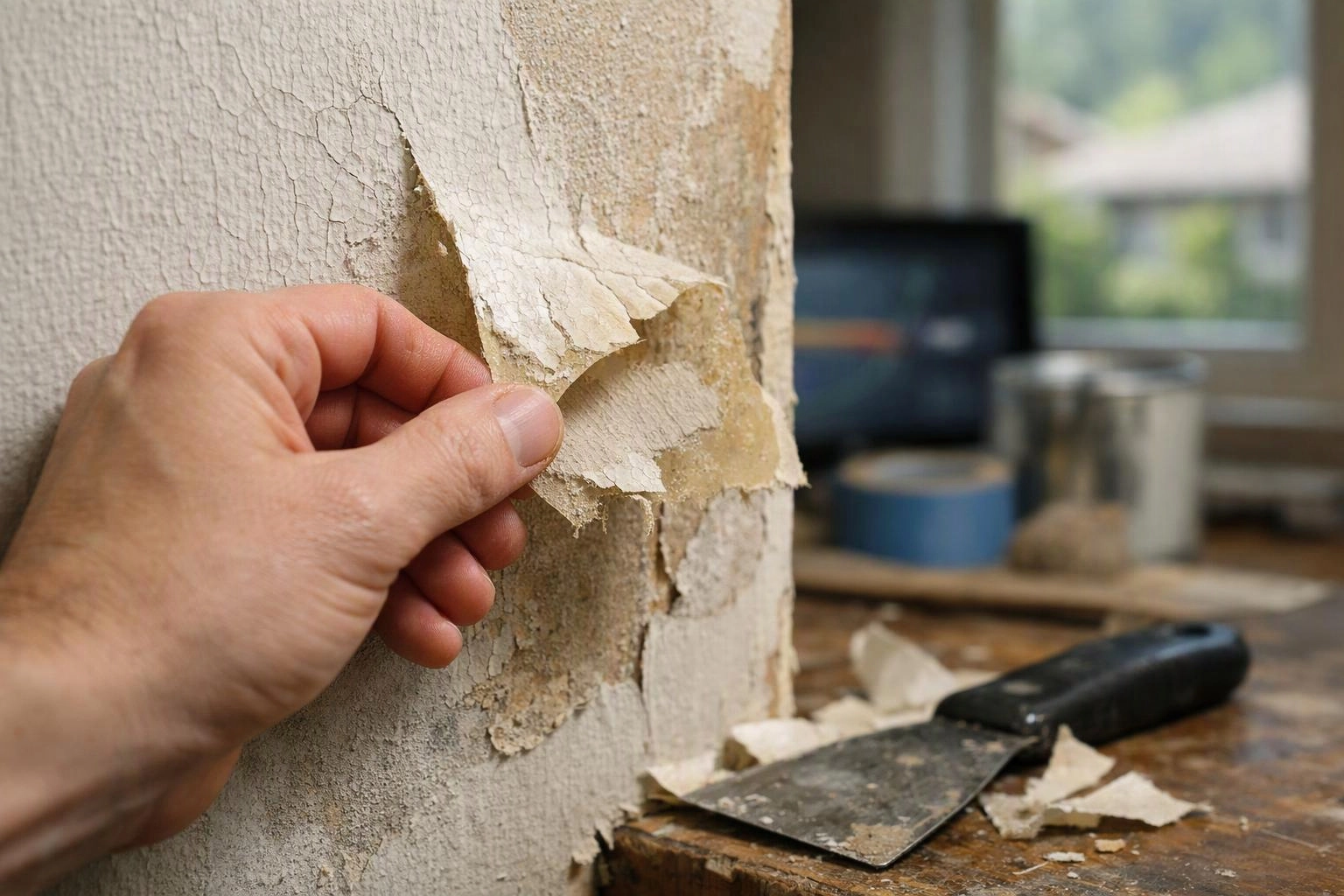
Water stains, mildew, and a damp wall can point to a problem behind the wall covering. Paint won't correct the cause or create a stable surface over damaged material.
We inspect the wall condition after removal and look for soft areas, damaged drywall, or weakened plaster. Any needed wall repair must be complete before sealing and painting.
DIY vs Calling PainterIssaquahwa.com
Homeowner preparation may suit a small, dry, stable area, while complex wallpaper removal needs a closer surface inspection.
Our team handles wallpaper removal, wall repair, and interior house painting as one connected process. The table shows how the work differs.
| Factor | What you can do yourself | What we do |
|---|---|---|
| Wallpaper removal | You can assess whether a small area appears dry and firmly attached. | We identify unstable layers and remove them without treating surface failure as a paint problem. |
| Homeowner preparation | You can clear furniture and point out stains, bubbles, or areas of concern. | We protect the work area and plan the preparation around the wall condition. |
| Surface inspection | You can note visible lifting, cracks, or damp areas. | We check the exposed drywall or plaster for stability and damage. |
| Wall repair | You can describe known damage before work begins. | We address defects that would affect a smooth paint finish. |
| Interior house painting | You can choose the desired color and finish. | We paint after the prepared surface is ready for proper adhesion. |
How We Prepare Walls After Wallpaper Removal
Wall preparation after wallpaper removal includes cleaning residue, repairing defects, smoothing the surface, and priming before paint.
We remove adhesive residue and scrape away loose material before evaluating the exposed wall. Sanding, patching, and smoothing help create an even surface.
We use primer when the wall needs sealing or when the substrate could affect paint adhesion. This preparation helps reduce visible defects and future paint failure.
Checking the Wall Surface
Drywall and plaster need a stable surface before they receive primer or paint.
We check for wall damage, soft areas, torn facing, cracks, and loose sections. Surface stability guides the repair and sealing work.
Choosing Wallpaper Removal or Painting
Wallpaper condition determines whether removal or limited repair is the sounder painting choice.
We consider the paint finish, adhesive residue, wall repairs, and the strength of the remaining bond. A smooth finish needs more careful preparation than a finish that hides minor texture.
What Changes the Work Needed for This Project?
The work needed changes with the wallpaper layers, wall damage, and finish the room requires.
We review these conditions before deciding on removal, repairs, primer, and paint preparation.
How to Request an Estimate for Wallpaper Removal and Painting
PainterIssaquahwa.com can review the wallpaper condition and provide an estimate based on the removal, preparation, and painting work required.
We assess the visible defects, wall substrate, adhesive residue, repair needs, and desired paint finish. Our estimate reflects the connected scope of wallpaper removal and interior house painting.
Free Estimates Available for projects that need a clear review before work begins. Contact our team through the site to discuss the room and request an assessment.
Questions About Removing Wallpaper Before Painting
Can loose wallpaper seams be repaired without removing all the wallpaper?
Loose wallpaper seams may be repaired locally when the surrounding covering remains dry, flat, and firmly bonded. We remove broader unstable areas when the bond has failed across the wall.
Why does wallpaper bubble after painting?
Wallpaper can bubble after painting when moisture from the paint reaches weak adhesive, trapped air, or an unstable backing. The bubbles show that the layer below the paint wasn't ready for a new coating.
Can wallpaper adhesive damage drywall?
Wallpaper adhesive can contribute to drywall damage when removal pulls at the paper facing or leaves moisture-softened areas. We inspect the exposed drywall and repair damaged sections before painting.
Should old wallpaper be removed before applying primer?
Old wallpaper should be removed before primer when the covering is loose, bubbled, damaged, or poorly bonded. Primer belongs on a clean, stable wall surface after residue and defects have been addressed.