When Ceiling Cracks, Stains, or Peeling Texture Need More Than a Patch
Ceiling texture repair for cracks, water stains, or peeling texture needs more than a patch when movement, moisture, or weak texture affects the surface. Thomas J. Painting checks the cause, repairs the ceiling, and provides Free Consultations.
Get a Free Estimate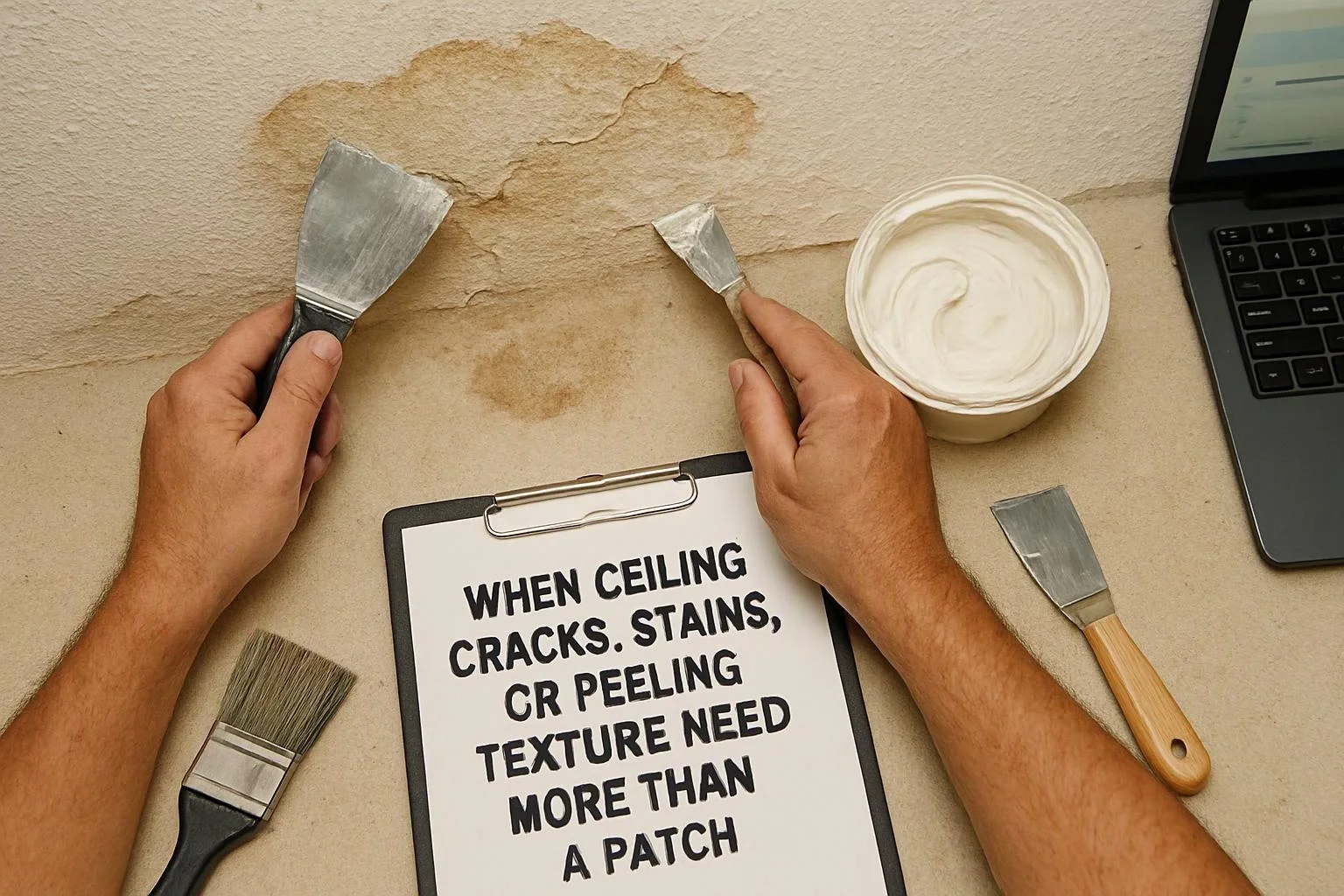
When Does Ceiling Texture Damage Need More Than a Patch?
Ceiling texture damage needs more than a patch when the cause affects the surrounding surface or the damage keeps returning.
A small, stable mark may need limited patch repair. Cracks that spread, stains that grow, or texture that keeps lifting point to a wider issue. Our team checks the surface and the underlying cause before we plan ceiling patching or painting.
Our Ceiling Texture Repair work connects diagnosis, repair, texture matching, and the final paint finish.
Signs Your Ceiling Needs Broader Repair
Visible ceiling damage can show that the problem reaches beyond the first damaged spot. These signs help us judge whether spot repair is suitable.
We treat bulging surfaces and suspected moisture damage as warning signs. Our crew checks the condition before applying new material.
What Causes Cracks, Water Stains, and Peeling Texture?
Ceiling texture damage commonly comes from movement, moisture, or poor bonding. Our team looks for the cause that matches the visible pattern.
We also look for blistering paint, stained drywall, and signs of water damage. The repair plan depends on whether the surface is dry, stable, and well bonded.
What a Ceiling Water Stain Can Mean
A ceiling water stain can signal an active or past leak, so the moisture source must be checked before cosmetic repair.
An active leak can continue damaging ceiling drywall after the surface looks dry. An old leak can leave weakened material, discoloration, or mold risk. We coordinate the repair sequence around the condition we find, and we don't seal in damp material.
Leak detection may require attention to plumbing, roofing, or other building systems. If the source involves regulated plumbing or roofing work, we identify the concern and advise using the proper licensed trade for that work before our ceiling repair continues.
Patch Repair or Full Texture Repair?
The right ceiling repair depends on how far the damage extends and how closely the new texture must blend.
Our team compares the damaged area with the surrounding ceiling before choosing the repair scope. The table shows how common repair choices differ.
| Repair choice | When it fits | Main consideration |
|---|---|---|
| Spot patch | The damage is limited and the surrounding texture is sound. | The patch must be prepared for a clean texture blend. |
| Texture blending | The repair needs to connect with an existing pattern. | Pattern, depth, and paint blending affect the result. |
| Section repair | Damage reaches beyond one small spot. | The repair must transition across a wider area. |
| Ceiling replacement | Drywall is badly weakened, swollen, or unsuitable for repair. | The new surface still needs texture and paint preparation. |
We include surface preparation, texture work, and the requested paint finish in the repair discussion. The damage area, drywall condition, and desired appearance shape the quote.
Why Peeling Ceiling Texture Shouldn't Be Painted Over
Peeling ceiling texture shouldn't be painted over because loose material can keep separating and spoil the new finish.
Paint cannot create a strong bond over loose texture. We remove unstable material, check the surface, and complete the needed preparation before applying primer.
Interior house painting works best when the ceiling is dry, stable, and properly prepared. Loose texture, patching compound, and sanding dust can all affect the final finish.
How We Prevent Ceiling Texture Problems From Returning
Prevention starts with correcting the condition that weakened the ceiling. Our crew follows the surface from the cause through the final paint coating.
Good preparation helps the new texture bond and keeps paint blending consistent. We also explain any condition that needs attention before painting.
How We Assess and Repair Damaged Ceiling Texture
Ceiling texture repair starts with a visual inspection and a plan based on the surface condition. We keep the process focused on cause, preparation, matching, and finish.
Our team adjusts the sequence when water damage or drywall replacement changes the work. We explain what the repair includes before the job begins.
When Ceiling Texture Removal Is the Better Choice
Ceiling texture removal can make more sense when the texture is widely damaged, poorly bonded, or no longer suits the planned finish.
Popcorn ceiling removal may be considered when broad areas have loose texture or when a smooth ceiling is the goal. We assess the existing material and surface condition before planning removal.
Removal can expose more preparation work beneath the texture. Our crew repairs the surface, prepares it for interior painting, and discusses the finish you want.
What Changes the Scope of a Ceiling Texture Repair?
Ceiling repair scope changes with the damage area, moisture condition, texture pattern, drywall condition, and requested finish.
A small crack in sound drywall calls for a different approach than recurring cracks across a joint. Water damage can add drying, material removal, or drywall repair to the work.
Ceiling height affects access and protection needs. Texture pattern and paint finish affect matching, sanding, priming, and paint blending. We use these details to prepare an accurate quote.
Can You Paint After Ceiling Texture Repair?
Yes, you can paint after ceiling texture repair once the repaired surface is sound, prepared, and ready for primer and paint.
We check that the repaired texture is stable and that the surface is ready for coating. Primer helps prepare the repair, while paint blending supports consistent color across the ceiling.
Should ceiling texture repair be completed before interior painting? Yes. Repairing the ceiling first prevents sanding dust, loose texture, and patch work from damaging a fresh paint finish.
Questions About Ceiling Cracks, Stains, and Peeling Texture
Can a water-stained ceiling be repaired without replacing the drywall?
Yes, a water-stained ceiling can be repaired without replacing the drywall when the drywall is dry, sound, and stable. Thomas J. Painting checks the moisture concern, prepares the stain, and plans the repair around the drywall condition.
Can ceiling texture be matched after a patch?
Yes, ceiling texture can often be matched after a patch when the existing pattern remains clear and the repair is properly prepared. We compare texture depth, pattern, and surrounding paint before completing the blend.
Is peeling ceiling texture a sign of water damage?
Peeling ceiling texture can be a sign of water damage, but poor adhesion and humidity can also cause loose texture. We inspect the surface and look for moisture-related signs before choosing the repair.
Should ceiling texture repair be completed before interior painting?
Yes, ceiling texture repair should be completed before interior painting. Repairing, sanding, matching, and priming the ceiling first helps protect the final paint finish.
Ceiling cracks, stains, and peeling texture need a repair plan that addresses the cause and the finish. Thomas J. Painting provides Free Consultations to review the ceiling and explain the next step.
Get a Free Estimate