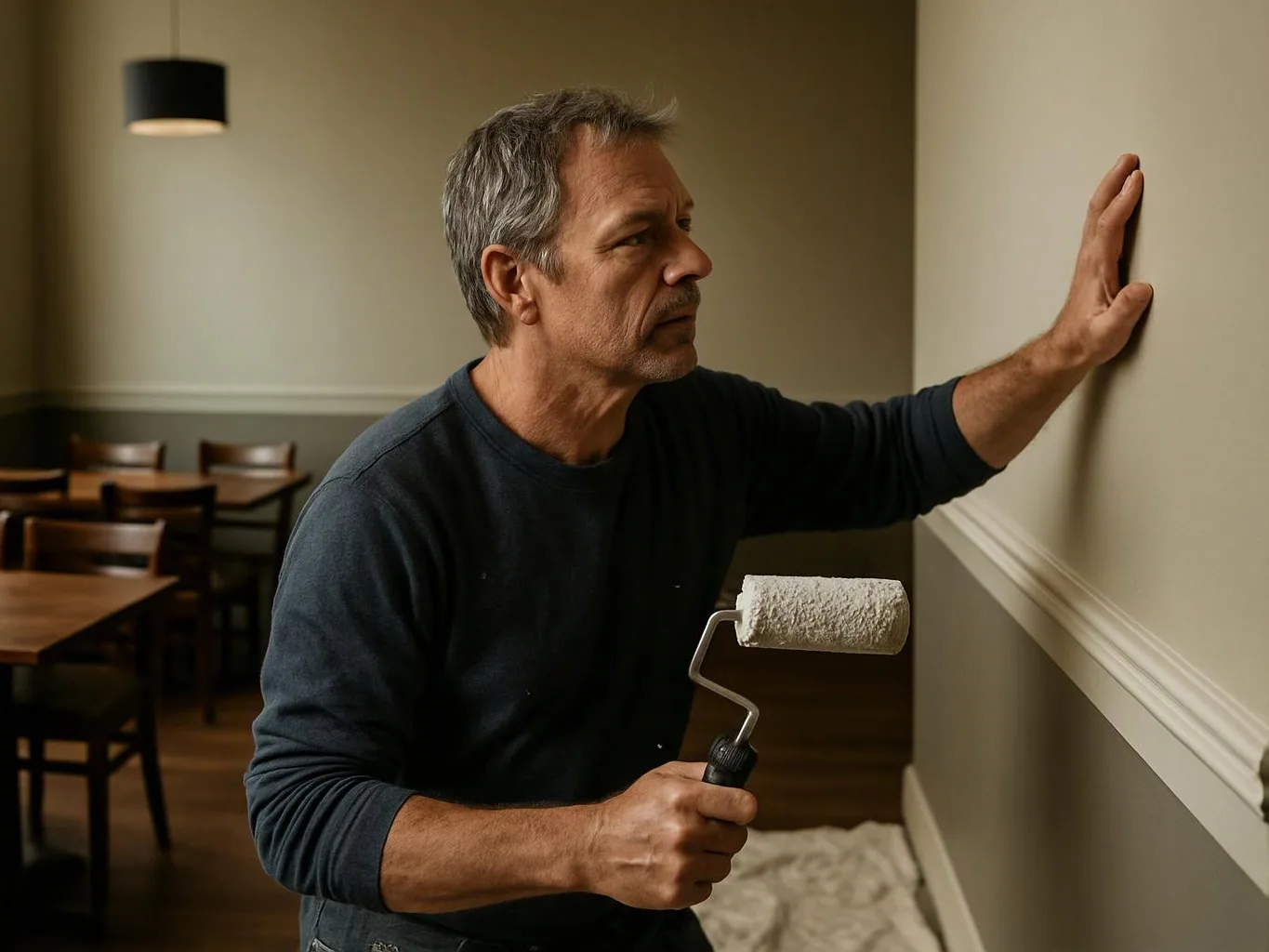
What Peeling or Bubbling Interior Paint May Mean
Peeling and bubbling interior paint usually points to moisture, heat, poor surface preparation, or failing paint layers. Thomas J. Painting checks the surface, addresses the cause, and repairs the damaged area before applying new paint.
Get a Free EstimateWhat Peeling or Bubbling Interior Paint Looks Like
Interior paint can fail in several visible ways. These signs often show that the paint film or the surface beneath it needs attention.
These signs can appear alone or together. Our team looks at the pattern, location, and condition of the surface before choosing a repair.
What Peeling or Bubbling Paint May Mean
Peeling or bubbling interior paint usually means the coating has lost adhesion or the wall has an underlying moisture or heat problem.
The location and shape of the damage can help point to the cause. We compare those clues with the condition of the wall, ceiling, and paint layers.
| Possible cause | What you may notice | What we check |
|---|---|---|
| Moisture intrusion | Bubbles, stains, soft areas, or recurring peeling | Nearby leaks, damp areas, and the moisture source |
| Condensation | Damage near bathrooms, windows, or cold walls | Humidity, airflow, and repeated dampness |
| Heat | Blisters near warm surfaces or heat sources | Surface temperature and coating condition |
| Poor adhesion | Loose edges, lifting layers, or widespread flaking | Paint bond and preparation beneath the coating |
| Surface contamination | Patchy failure over dirty or greasy areas | Dust, grease, residue, and other contaminants |
| Old paint layers | Delamination between older and newer coatings | Layer condition and coating compatibility |
Why Is Interior Paint Peeling?
Interior paint peels when moisture, contamination, weak preparation, or coating failure breaks the bond between paint and the surface.
Common causes include the following. We identify the likely cause before we prepare the area for new paint.
How We Check the Damaged Surface
Our team checks the damaged area, traces visible moisture clues, and determines whether the substrate can hold new paint.
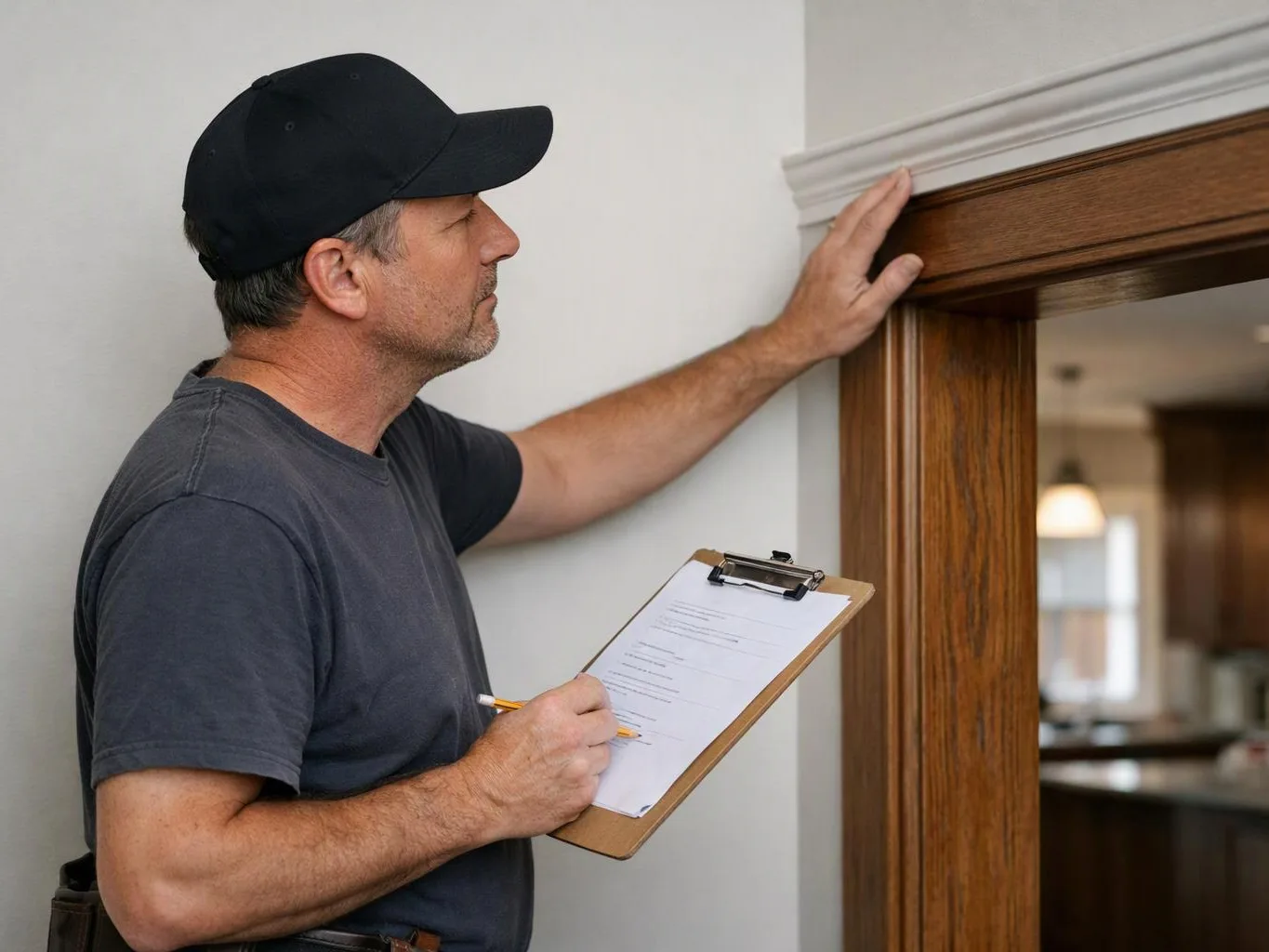
We start with a visual inspection of the wall or ceiling. We look for stains, soft drywall, loose paint, cracking, and changes in the ceiling texture.
Next, we consider the possible moisture source and test the paint adhesion by examining affected layers. We also review the surface preparation needed for a stable repair.
When the damage points to a plumbing, roofing, or structural issue, that source needs attention before painting continues. We can explain what must be resolved so the repair does not cover an active problem.
Can Moisture Cause Interior Paint to Peel?
Yes, moisture can cause interior paint to peel or bubble by weakening the paint bond and damaging the surface beneath it.
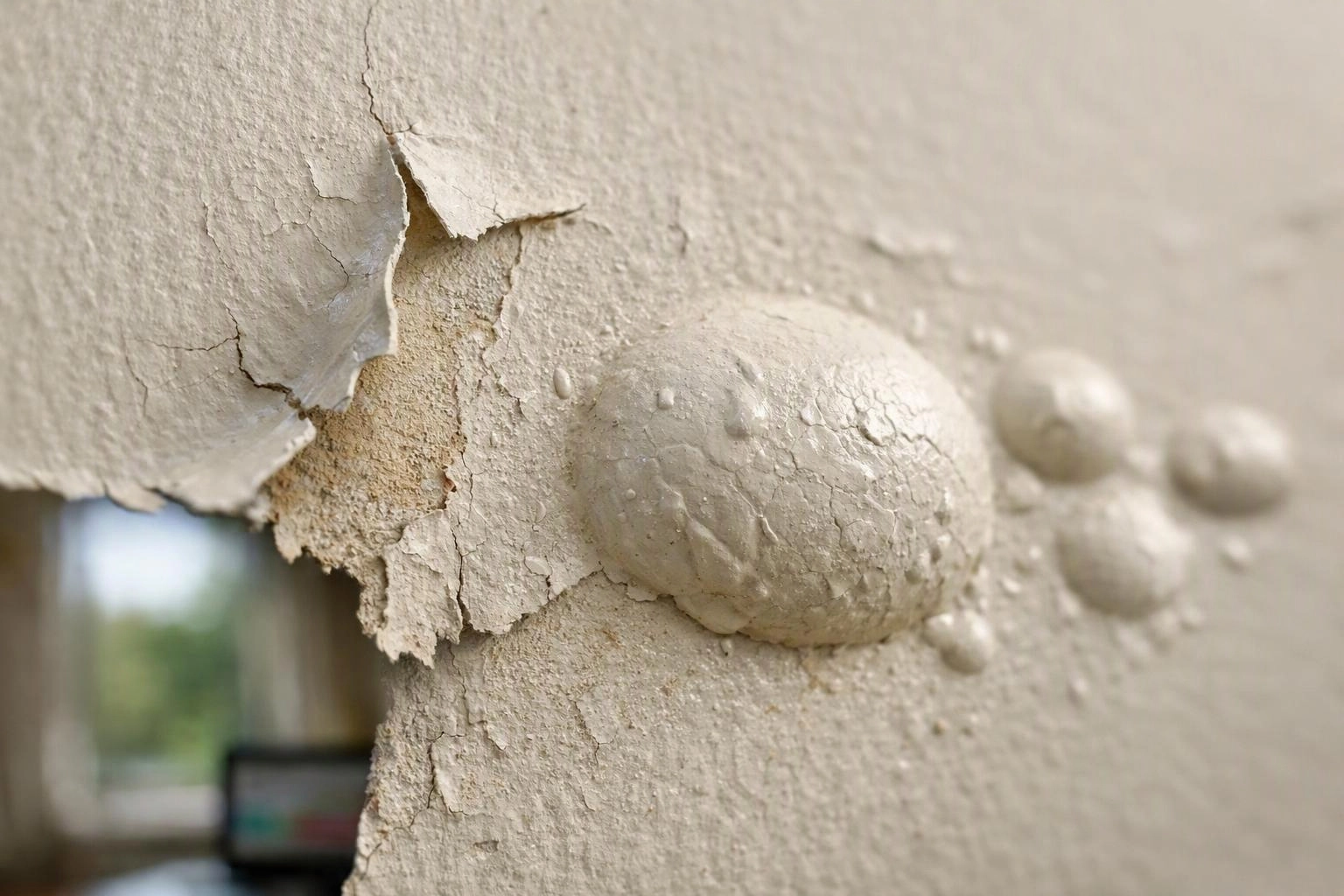
Water damage may come from plumbing leaks, roof leaks, bathroom humidity, or condensation. A water stain, soft drywall, musty area, or recurring bubble can signal an ongoing moisture source.
Our team checks the visible damage and explains the repair needed after the source is addressed. Dark growth or repeated dampness can also warn of mold, so the area should not be sealed without proper assessment.
Should You Repaint Over Peeling Paint?
No, repainting over loose or bubbling paint usually hides the failure temporarily and leaves the new coating poorly bonded.
Loose paint must be removed, and the remaining edges need careful scraping and sanding. Damaged drywall may need patching before the surface can accept primer.
We prepare the area until the surface is stable and smooth. Then we select the right primer and repaint the repaired section for an even finish.
How We Repair Peeling Paint and Bubbling Walls
Our repair process follows the condition of the coating, drywall, and ceiling texture.
We review the repaired surface before applying the finish coat. This helps prevent visible edges and supports stronger paint adhesion.
How to Help Prevent Paint from Peeling Again
Good moisture control and careful surface preparation can help prevent recurring paint failure.
Our team can point out preparation or moisture issues that may affect the new coating. We include those conditions in the recommended repair scope.
When Peeling Paint Needs More Than a Touch-Up
Peeling paint needs more than a touch-up when bubbling returns, damage spreads, or the surface beneath the coating is weak.
Recurring bubbling can point to persistent dampness or an unresolved leak. Spreading damage, soft drywall, stained ceilings, and ceiling texture damage also need a closer surface assessment.
We remove unstable material and check whether the substrate can support new paint. If the cause is outside the paint layer, we explain what needs attention before the repair is completed.
What Our Interior Paint Assessment Covers
Thomas J. Painting offers Free Consultations to review the damaged paint, explain the repair scope, and identify the work needed for a sound finish.
Our assessment can cover interior house painting, ceiling texture repair, paint adhesion, drywall condition, and surface preparation. We explain which areas need removal, patching, priming, or repainting.
For broader projects, our Interior House Painting service can address related walls and ceilings as part of a complete finish plan.
Contact Thomas J. Painting to discuss the damaged area and request an exact quote based on its condition and repair needs.
Get a Free EstimateQuestions About Peeling or Bubbling Interior Paint
How can you tell if bubbling paint is caused by water?
Thomas J. Painting looks for water stains, soft drywall, recurring bubbles, and damage near likely leak paths. We also check whether dampness or condensation could be weakening the paint bond.
Can old paint cause new interior paint to peel?
Yes, old paint can cause new interior paint to peel when the older layers are loose, contaminated, or incompatible with the new coating. We check the paint layers and prepare the surface before applying primer and finish paint.
What should you do when ceiling paint keeps bubbling?
Ceiling paint that keeps bubbling needs a moisture and surface assessment before repainting. We check for water damage, condensation, soft drywall, and ceiling texture damage.
Is peeling paint a sign of mold?
Peeling paint can occur near mold warning signs, but peeling alone does not confirm mold. We look for persistent dampness, musty areas, stains, and soft surfaces before recommending the next repair step.