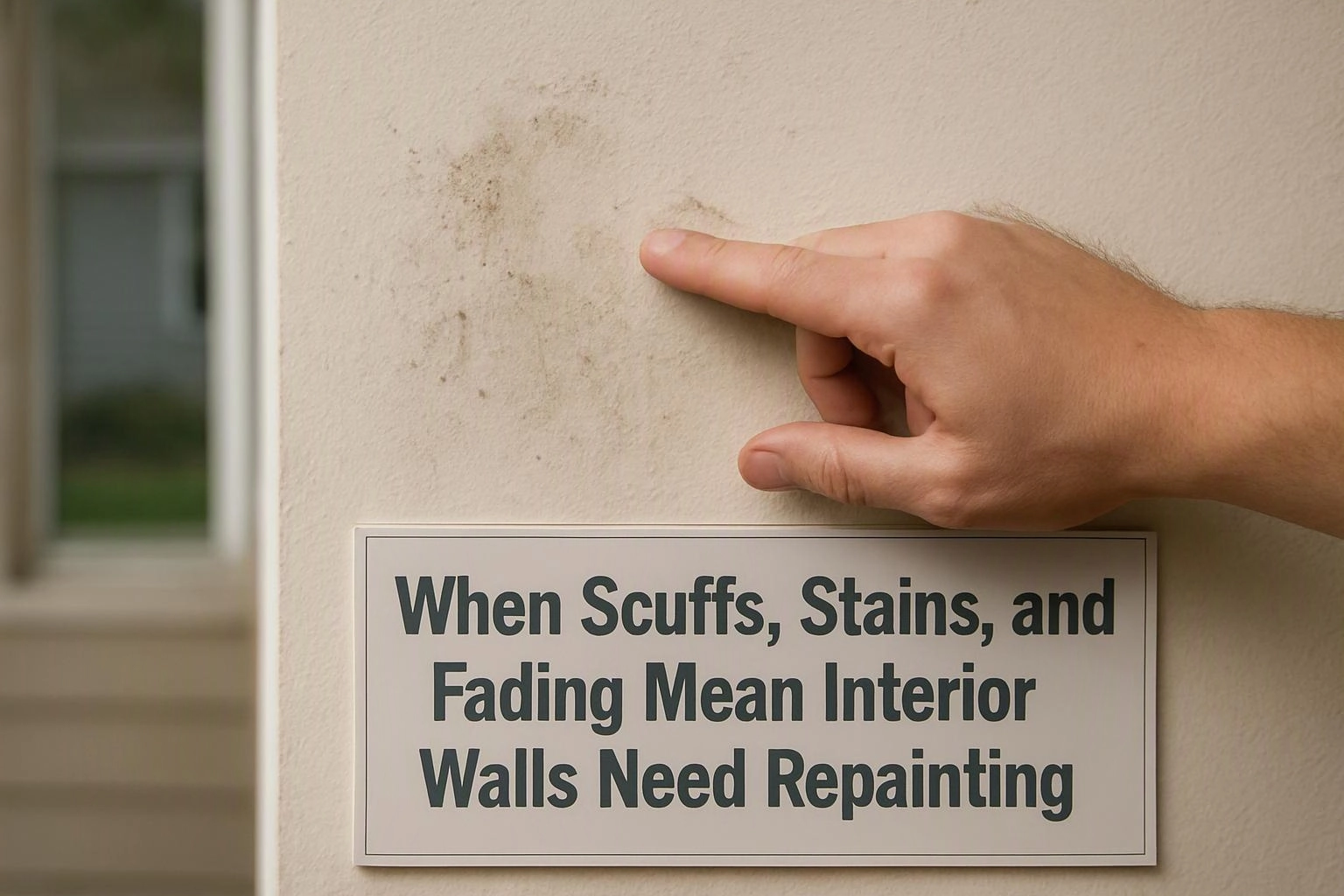
When Scuffs, Stains, and Fading Mean Interior Walls Need Repainting
Interior walls need repainting when scuffs remain after safe cleaning, stains keep showing through, or fading makes the finish uneven. PainterIssaquahwa.com checks the wall condition, prepares the surface, and matches the repainting approach to the damage.
Get a Free EstimateWhat Scuffs, Stains, and Fading Reveal About Your Walls?
Interior walls show signs that indicate the need for repainting when marks affect the paint film, not just the surface dust. A cleanable mark sits on top of sound wall paint.
Surface condition matters because damaged paint may not accept new paint evenly. A failing paint finish can cause uneven color, weak paint coverage, or poor adhesion after repainting.
Three Warning Signs Your Interior Walls Need Repainting
Interior walls usually need repainting when scuffs stay visible, stains return or bleed through, and fading creates uneven color.
These signs can occur alone or together. Our team checks whether the problem needs touch-up painting, full-wall repainting, or added surface preparation.
Can Scuffed Walls Be Cleaned Instead of Repainted?
Yes, scuffed walls can be cleaned when the paint film remains intact and the mark sits on the surface.
Use a soft cloth, mild cleaner, and gentle pressure on washable paint. Test an unseen area first because some paint sheen levels mark easily during cleaning.
Cleaning may not work when the scuff has removed paint, changed the sheen, or exposed a different layer. In those cases, touch-up paint may help, but color matching and paint coverage can still make the repair visible.
When Stains and Fading Need More Than a Touch-Up
Stains and fading need more than a touch-up when the cause affects the surface or the new paint cannot blend with the surrounding wall.
Water stains can point to moisture damage that needs attention before repainting. Grease stains can interfere with paint adhesion, while smoke stains may continue to show through ordinary interior paint.
Sun fading can spread across a broad area, so a small touch-up may leave uneven color. Our team evaluates the wall condition and selects stain treatment, primer, and paint coverage based on the damage.
Do Peeling Marks Mean the Wall Needs Repainting?
Yes, peeling marks usually mean the wall needs surface preparation before repainting.
Peeling paint, flaking paint, blistering paint, and loose paint show that the existing coating has lost strength. New paint applied over loose material can fail with the old layer.
Our crew checks the affected area, removes unstable paint, and corrects surface damage before applying new wall paint. Careful wall preparation supports stronger paint adhesion and a smoother finish.
DIY Cleaning or Calling Us: Which Wall Repair Approach Fits?
DIY wall cleaning fits light surface marks when the paint is sound, while we handle preparation and repainting when damage affects coverage or adhesion.
The right choice depends on the depth of the mark and the condition of the paint film. A simple cleaning attempt should stop if the finish becomes dull, sticky, or damaged.
| Factor | What you can do yourself | What we do |
|---|---|---|
| Light scuff marks | Try gentle cleaning on sound, washable paint. | Check whether cleaning caused sheen changes or exposed damage. |
| Stains | Clean safe surface marks and watch for stains that return. | Assess the cause and select suitable stain treatment and primer. |
| Peeling or flaking | Avoid painting over loose material. | Perform surface preparation, patching, and repainting. |
| Broad fading | Compare the wall in natural light before choosing touch-up paint. | Plan color matching and paint coverage for a consistent finish. |
How We Prepare Interior Walls for a Lasting Repaint
Our team prepares interior walls by checking the damage, correcting surface problems, and applying the paint system the wall needs.
Our preparation approach supports both small repairs and broader interior house painting projects. You can review our Interior House Painting service when several rooms need a coordinated refresh.
What Changes the Cost of Repainting Marked Interior Walls?
The cost of repainting marked interior walls depends on wall condition, preparation needs, paint coverage, and finish selection.
Wall area affects the amount of work, while surface preparation affects how much correction comes before painting. Stain treatment, primer, paint finish, and the number of coats can also change the project scope.
Our team reviews these factors during the estimate so the quote reflects the actual repainting work. Request a free estimate for an exact project review.
Questions About Repainting Marked Interior Walls
Can stains show through fresh interior wall paint?
Yes, stains can show through fresh interior wall paint when the surface receives no suitable stain treatment or primer. Our team checks the stain source and prepares the wall before repainting.
How do I know if a wall needs a full repaint or a touch-up?
A wall needs a full repaint when damage covers a broad area, color matching is difficult, or the paint finish has changed. Touch-up painting fits smaller marks when the surrounding paint remains sound and matches well.
Why does interior wall paint fade unevenly?
Interior wall paint fades unevenly when sunlight reaches some areas more strongly than others. Different cleaning patterns and nearby furniture can also leave the finish with uneven color.
What should I do before repainting a peeling wall?
Before repainting a peeling wall, the loose paint and surface damage need proper preparation. Our team checks the wall, prepares unstable areas, and chooses primer and paint for better adhesion.