When Peeling Siding Paint Points to a Bigger Repair
Peeling paint and damage on wood siding often point to moisture entry, failing wood, or poor adhesion beneath the coating. Thomas J. Painting checks the siding condition first, repairs damaged areas, and prepares sound surfaces before painting.
Get a Free Estimate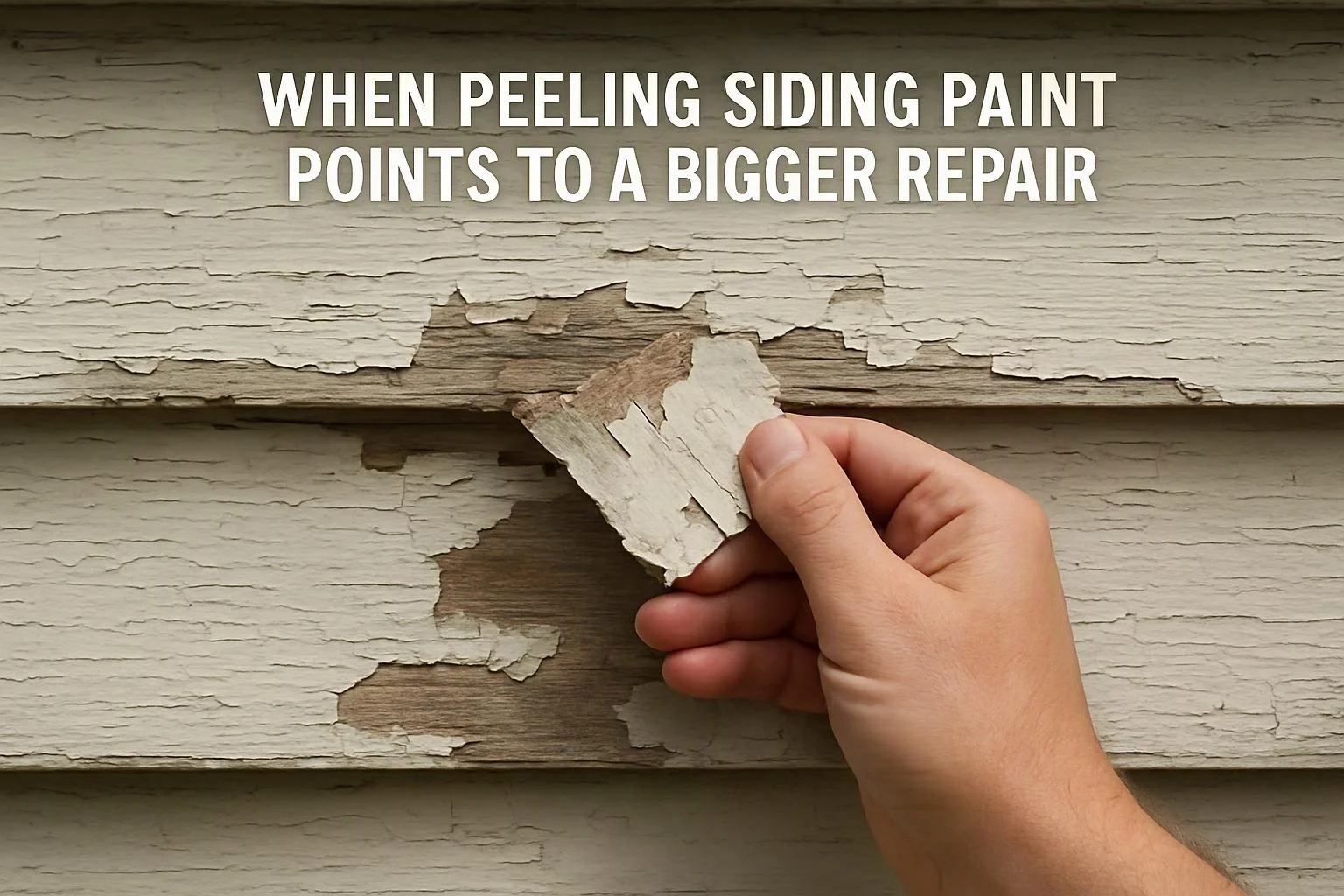
Why Peeling Paint on Wood Siding Can Mean More Than a Paint Failure
Peeling paint on wood siding can signal moisture or damaged wood beneath the coating, so the surface needs inspection before repainting.
Water can enter through seams, joints, edges, or failed caulk. Moisture may then weaken the wood and reduce paint adhesion. We check the exposed surface and nearby details before choosing the repair plan.
Blistering paint, flaking paint, and cracked paint can all show a failed exterior coating. The visible paint failure may only be the outer sign of moisture intrusion or wood deterioration.
Signs That Peeling Paint Hides Siding Damage
Several surface changes can point to damage below the paint film. We inspect these signs together because one symptom may have more than one cause.
What Causes Paint to Peel From Wood Siding?
Peeling siding paint usually comes from moisture, poor bonding, or a coating that does not suit the surface. We look for the source before applying new exterior paint.
How We Check Wood Siding Before Painting
Thomas J. Painting checks the exposed siding, nearby joints, and damaged areas before deciding whether repair or paint preparation comes first.
Our team looks for paint failure, soft wood, wood rot, and signs of moisture entry. We also review the wood grain, seams, edges, and fasteners for movement or gaps.
The inspection helps us separate surface preparation from siding repair. We then explain which areas need wood repair and which areas only need preparation for paint.
Our approach to exterior painting services starts with a sound surface. That protects paint adhesion and helps the finish perform as intended.
Should Damaged Siding Be Repaired Before Painting?
Yes, damaged or unstable siding should be repaired before painting because new paint can't restore weak wood or stop moisture entry.
Soft siding and wood rot can continue to worsen beneath a fresh paint coating. We remove or repair affected areas and check that replacement boards sit securely.
Replacement boards may be needed when the existing material has lost its strength. Proper siding repair gives the paint system a stable surface and supports lasting paint adhesion.
Can You Paint Over Soft or Rotten Siding?
No, paint shouldn't cover soft or rotting siding because the coating won't make the wood sound or correct the source of damage.
Rotted siding can break down under a new paint coating. Soft wood can also move, absorb moisture, and cause another paint failure.
Our crew identifies moisture damage and determines whether wood replacement is needed. We prepare the remaining sound surface before applying an exterior coating.
How We Prepare Siding for a Durable Paint Finish
Durable exterior paint depends on clean, stable siding and careful preparation. Our crew follows a clear process so each coating bonds to a ready surface.
How to Help Prevent Peeling Paint on Wood Siding
Routine care can help you notice moisture problems before they spread. We recommend watching the siding and surrounding water paths during regular home maintenance.
What Changes the Cost of Repairing and Painting Damaged Siding?
The cost changes with the damaged area, repair depth, access, preparation, materials, and final coating; our free consultations help define the work before we provide a quote.
Extensive paint failure can require more scraping, sanding, cleaning, and priming. Deeper wood repair may also require more replacement materials.
Siding accessibility affects the work plan, while the chosen paint system affects the final materials. We review these factors during a project assessment and explain what the quote includes.
When to Bring in Thomas J. Painting for Peeling Siding
Exterior house painting should begin with a siding condition check when peeling paint covers wood siding.
Our team handles wood siding repair, carpentry related to damaged boards, and paint preparation as part of the project assessment. We can help when you see soft spots, rotted boards, swollen siding, or repeated paint failure.
A siding contractor needs to address the surface condition before applying a new exterior coating. Thomas J. Painting checks the work area, explains the needed repairs, and helps you request a clear quote through our Free Consultations.
Questions About Peeling Paint and Wood Siding
How can I tell if siding is rotten under paint?
Thomas J. Painting checks for soft spots, crumbling fibers, dark discoloration, swollen wood, and loose boards beneath failed paint. Our team also reviews nearby seams and joints because moisture may enter around those areas.
What should I do about peeling paint on wood siding?
Peeling paint on wood siding should be inspected before scraping and repainting. We identify moisture entry, repair damaged wood, and prepare the sound surface for a new coating.
Why does paint peel on the shaded side of a house?
Paint can peel on a shaded side when moisture remains on the siding or beneath the coating. We check for trapped moisture, mildew, open joints, and poor surface preparation before selecting a repair and paint plan.
Does peeling paint always mean the siding needs replacement?
No, peeling paint doesn't always mean the siding needs replacement. We check whether the wood is sound, then repair or replace only the areas that cannot support proper paint adhesion.
Related Resources
Thomas J. Painting vs Local Carpenter Alternatives in Issaquah: Side-by-Side Comparison
Compared ToLocal Specialist vs National Carpenter Providers in Issaquah: Cost & Service Compared
Brand vs BrandCarpenter Companies Worth Comparing in Issaquah (2026)
How It WorksExterior House Painting Preparation and Application Process