Custom vs Prefabricated Carpenter Options: Performance & Value Compared
Carpenter options are compared by performance, maintenance, finish, fit, and overall value. Custom carpenter options offer more control over fit, design, and finish, while prefabricated options can simplify selection and installation. Thomas J. Painting helps you compare surface condition, maintenance needs, and the finish your deck requires.
Get a Free EstimateCustom and Prefabricated Carpenter Options at a Glance
Custom options provide more control over fit and design, while prefabricated options offer a simpler path when standard components meet the project needs.
Both choices can work well when the deck components match the structure and finish plan. We compare the deck layout, material selection, surface condition, and maintenance needs before recommending an option.
- Custom carpentry: Best for unusual layouts, exact measurements, repairs, and special finishes.
- Prefabricated carpentry: Best for straightforward layouts that suit standard components and repeatable designs.
| Factor | Custom Carpentry | Prefabricated Carpentry | Best Project Fit |
|---|---|---|---|
| Cost drivers | More design, measuring, and labor needs can raise project cost. | Standard parts can simplify planning and reduce cutting or fitting work. | Custom for special conditions; prefabricated for simpler scopes. |
| Installation timeline | Planning and site fitting may require more project coordination. | Standard components can make planning more predictable. | Prefabricated for repeatable layouts. |
| Maintenance | Access and repairs can be designed around the existing deck. | Matching replacement parts can simplify future maintenance. | The right choice depends on access and component compatibility. |
| Project fit | Irregular layouts, older decks, and unique design details. | Straightforward layouts using standard dimensions. | Choose based on design fit and surface requirements. |
What Makes Custom Carpentry Different?
Custom carpentry adapts components to the deck's measurements, layout, materials, and finish requirements.
Custom dimensions help address unusual corners, uneven framing, and existing deck changes. We review site conditions before choosing materials or planning paint and stain compatibility.
Surface preparation also affects the final result. We check for worn coatings, exposed wood, moisture damage, and areas that need repair before finish work begins.
Advantages of Custom Carpenter Options
Custom carpentry suits decks that need more than standard replacement parts. We connect the carpentry plan with surface repairs and the intended finish.
Who Benefits Most From Custom Carpentry?
Custom carpentry benefits homeowners with irregular deck layouts, older decks, unique design details, or custom finishes.
Older decks often contain mixed materials, altered framing, and worn surfaces. We account for those conditions so repairs, preparation, and finish selection work together.
What Makes Prefabricated Carpentry Different?
Prefabricated carpentry uses pre-made components with set dimensions, so the deck must suit the available parts.
Factory-made parts support repeatable design and consistent component compatibility. We still check measurements, surface condition, and finish preparation before using them on a deck.
Standard dimensions can simplify planning, but they may limit the design when the deck has unusual angles or existing damage.
Advantages of Prefabricated Carpenter Options
Prefabricated carpentry is best for decks with clear measurements and simple design goals. We confirm that the available parts fit the structure before planning the final coating.
Who Benefits Most From Prefabricated Carpentry?
Prefabricated carpentry benefits homeowners with straightforward deck layouts, standard components, repeatable finishes, and simple design goals.
Matching replacement parts can support maintenance when the deck uses common component sizes. We also check whether the existing surface can accept the selected paint or stain.
Which Option Performs Better on a Deck?
Custom carpentry performs better when exact fit and site conditions matter, while prefabricated carpentry performs well when standard parts fit the deck.
Weather exposure and moisture can affect wood movement, coating adhesion, and surface durability. We inspect joints, fasteners, exposed edges, and drainage areas before recommending a finish.
Custom components can improve structural fit around unusual connections. Prefabricated components can perform well when joint alignment and material compatibility are already clear.
Our team also checks whether old paint or stain is firmly attached. Weak paint adhesion must be addressed before applying a new coating.
For broader deck construction planning, our Deck builder service connects component choices with the existing structure and finish plan.
How Do Custom and Prefabricated Options Affect Value?
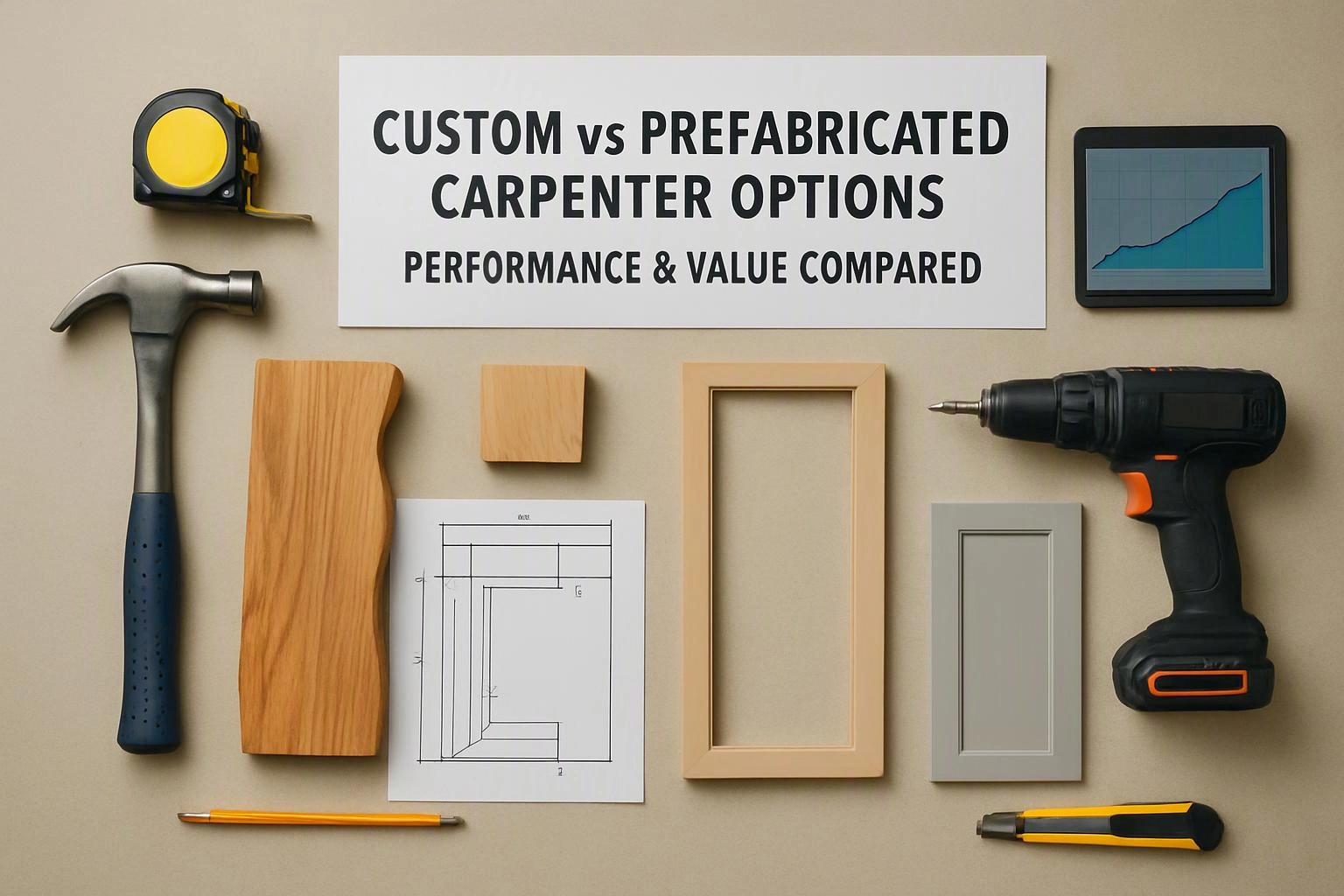
Custom options can add value through better fit and design control, while prefabricated options can add value through simpler planning and consistent parts.
Project scope, material waste, labor needs, and repair complexity all affect the result. We look for ways to reduce wasted work without forcing standard parts into a poor fit.
Maintenance access also affects long-term finish value. A component that is easy to inspect and repaint can support better maintenance planning.
What Changes the Cost of This Carpenter Choice?
The cost depends on materials, measurements, design complexity, surface preparation, repairs, and the finish selected. We review those details and provide a project quote, and consultations are free.
Deck size and component quantity affect the project scope. Material type, custom dimensions, and difficult access can also increase labor needs.
Preparation work matters when the deck has peeling paint, stain failure, moisture damage, loose components, or exposed wood. Painting or staining scope depends on the surface condition and the finish selection.
How We Check the Deck Before Recommending an Option
Our deck inspection connects component fit with surface condition and finish requirements.
We use the inspection to identify repair needs before recommending custom or prefabricated parts.
How Should You Choose Between Custom and Prefabricated Carpentry?
Choose custom carpentry for unusual layouts or exact design control, and choose prefabricated carpentry when standard parts meet the deck's needs.
Start with your deck goals and design priorities. Then consider the existing structure, maintenance expectations, finish appearance, and project constraints.
We help you weigh design fit against material compatibility and preparation needs. The best choice supports both the deck structure and the final painted or stained surface.
Prepare Your Deck for the Right Finish
Deck painting and deck staining perform best when surface preparation matches the wood and existing coating.
Our preparation may include cleaning, scraping, sanding, caulking, priming, and targeted repairs. We select the work based on surface condition, moisture control, and the finish system.
Weather protection also depends on sound surfaces and proper coating adhesion. We plan the finish so the selected paint or stain supports the deck's exposure and maintenance needs.
Thomas J. Painting reviews your deck, explains the carpenter choice, and connects the preparation plan to the final finish. Request a consultation to discuss your project.
Questions About Custom and Prefabricated Deck Options
Can prefabricated deck components be painted or stained?
Yes, prefabricated deck components can be painted or stained when their material and surface condition support the selected coating. Thomas J. Painting checks finish compatibility, prepares the surface, and addresses weak paint adhesion before coating.
Does custom carpentry work better for an older deck?
Custom carpentry often works better for an older deck when the layout, materials, or repairs no longer match standard parts. We inspect the existing structure and plan repairs, preparation, and finish selection together.
Can custom and prefabricated components be used together?
Yes, custom and prefabricated components can be used together when their measurements, materials, connections, and finishes are compatible. We check the joint alignment and coating needs before combining component types.
What deck problems should be fixed before painting?
Deck problems that should be fixed before painting include moisture damage, loose components, unstable surfaces, exposed wood, and peeling coatings. We address the surface condition first so the new paint can bond properly.
Which carpenter option allows more control over the final finish?
Custom carpentry allows more control over the final finish because dimensions, materials, repairs, and surface details can follow the coating plan. Prefabricated parts can still produce a strong finish when their surfaces and materials are compatible.