
What Is Paint Adhesion?
Paint Adhesion is the bond between a coating and the surface beneath it. Strong adhesion helps paint stay attached through normal use, cleaning, and changes in moisture. The bond depends on surface condition, cleanliness, texture, and product compatibility. Poor adhesion may lead to peeling, flaking, blistering, or early coating failure.
Quick Facts About Paint Adhesion
Category
Coating performance
Used for
Checking paint bonding
Common confusion
Adhesion is not the same as coverage
Also called
Coating adhesion, Paint bonding
Often discussed with
Commercial Painting
Key Takeaways About Paint Adhesion
- Adhesion describes bonding, not the paint’s color or sheen.
- Clean, sound surfaces give coatings a better grip.
- Peeling paint often signals an adhesion problem, but not always.
How Paint Adhesion Works
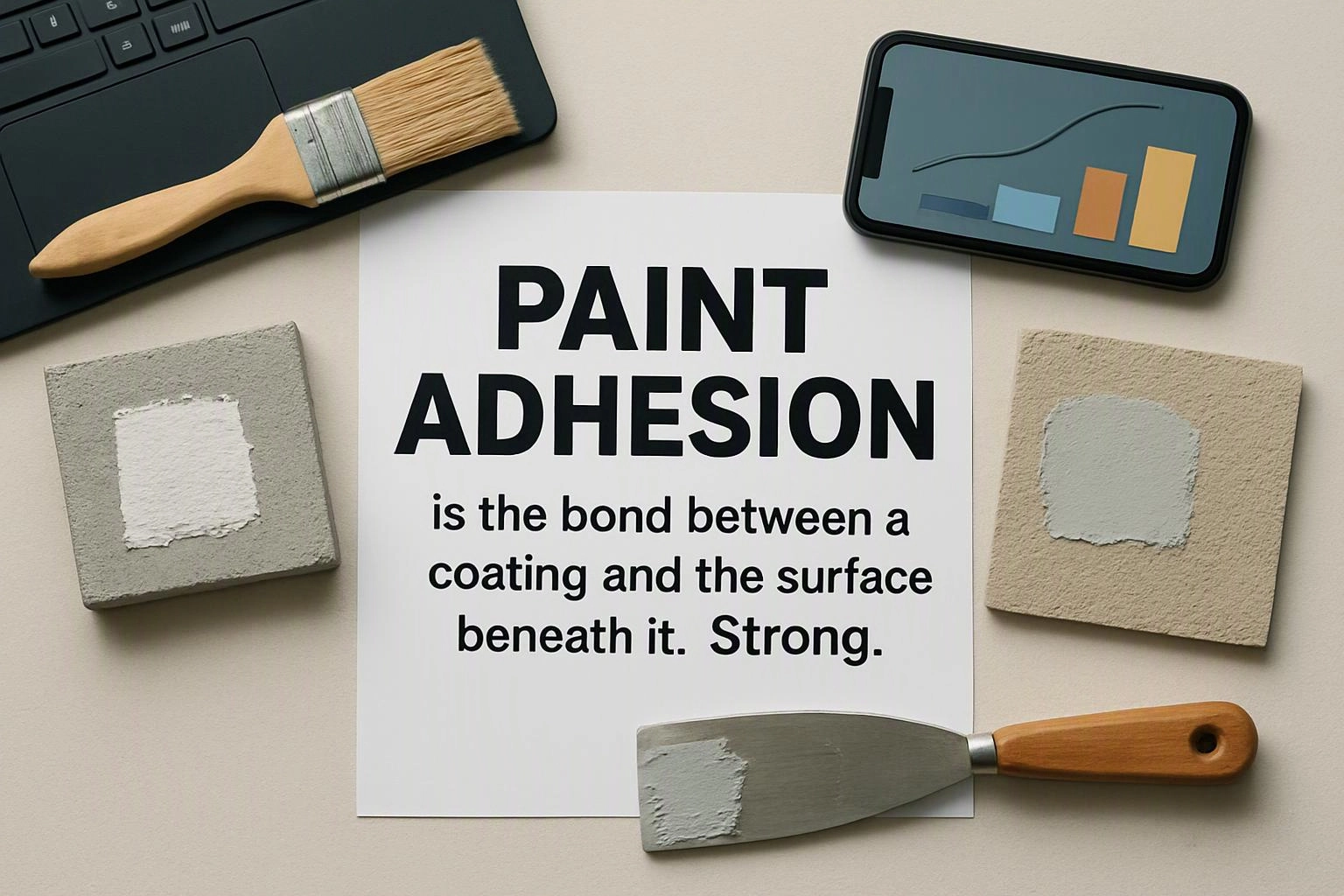
Paint Adhesion begins when wet coating contacts a prepared surface. The coating forms a bond as it dries and cures. Surface pores, light texture, and chemical compatibility can help the coating grip.
Related glossary terms: Paint Primer, Surface Preparation, Sanding.
Commercial painting crews look at adhesion before applying a new finish. They check for dust, grease, chalking, loose paint, and moisture. A smooth or glossy surface may need cleaning and light sanding. The right Paint Primer can also help a new coating bond to a difficult surface.
What Adhesion Looks Like on a Job?
- Sound paint stays attached when the surface is cleaned.
- Weak paint may lift, crack, or peel at edges.
- New coatings need a stable surface beneath them.
From the Thomas J. Painting team
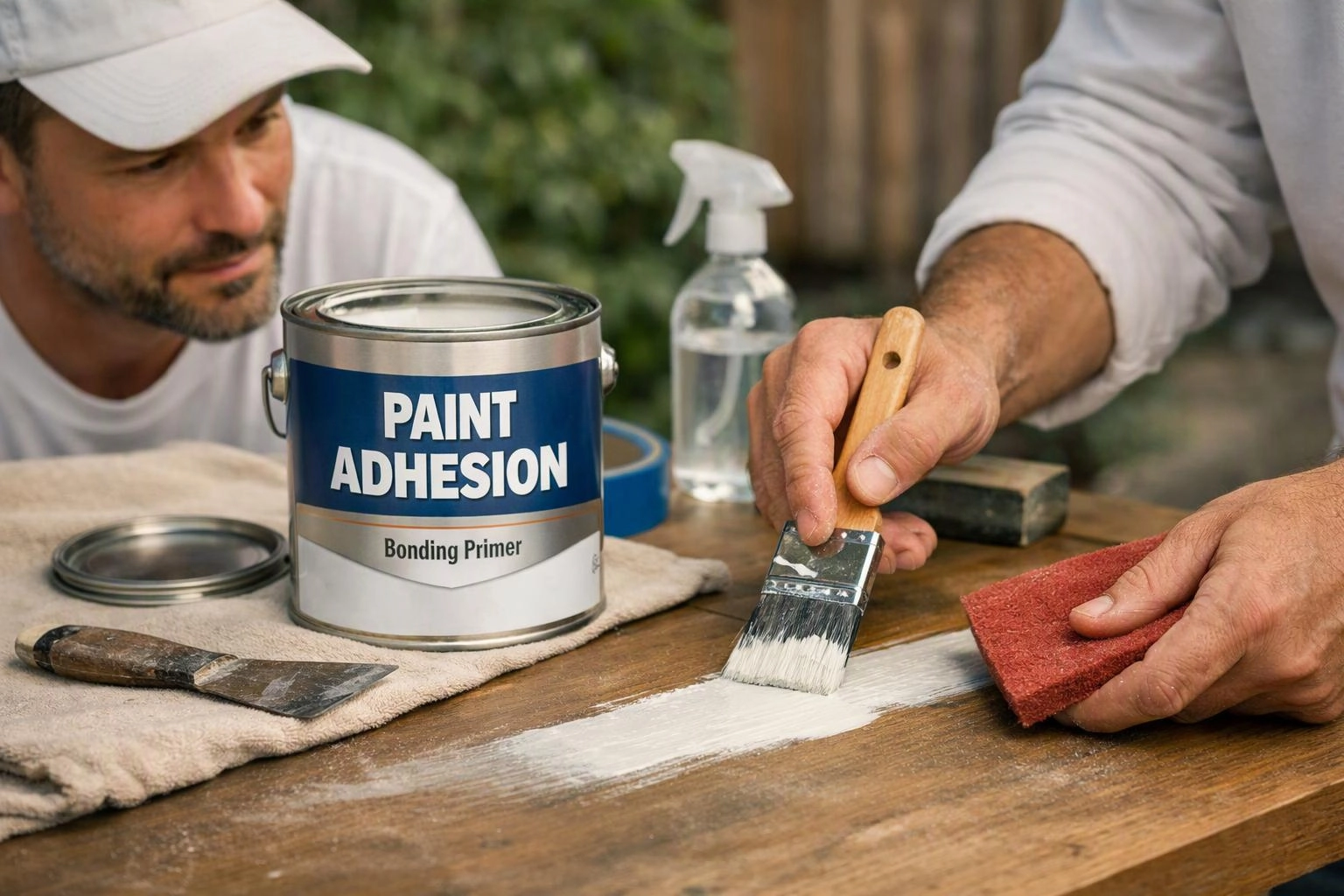
When we prepare commercial surfaces, we check for loose coatings, chalking, grease, dust, and moisture. We also look at gloss and texture before choosing cleaning, sanding, or primer steps. These checks help us apply the finish to a stable surface, not just cover an existing problem.
Paint Adhesion in Practice: A Real-World Example
A commercial office wall has a glossy old coating with small areas of peeling. The crew removes loose paint, cleans the wall, lightly sands the glossy areas, and primes where needed before applying the new finish.
Related Services
Related Terms
Paint Primer
A Paint Primer is a preparatory coating that helps paint bond to a surface and creates…
Surface Preparation
Surface Preparation is the planned cleaning, repair, and conditioning of a surface before paint application. It…
Sanding
Sanding is a surface preparation process that uses abrasive material to remove loose paint, smooth rough…
Peeling Paint
Peeling Paint is a surface failure that occurs when a paint film loses its bond and…
Thomas J. Painting
Have Questions About Paint Adhesion?
Contact Thomas J. Painting for practical guidance on Paint Adhesion and related painting contractor work in Issaquah.