
What Is Efflorescence?
Efflorescence is a white, powdery deposit that forms when water carries dissolved salts to a masonry or concrete surface. As the water evaporates, the salts remain behind. The deposit often appears on brick, concrete, stucco, or mortar and can affect how an exterior paint coating bonds to the surface.
Quick Facts About Efflorescence
Category
Masonry surface deposit
Used for
Identifying moisture-related residue
Common confusion
Often mistaken for mildew
Also called
Salt deposits, Masonry salt residue
Often discussed with
Exterior House Painting
Key Takeaways About Efflorescence
- The deposit usually looks white, chalky, or powdery.
- Moisture movement brings salts to the surface.
- Efflorescence isn't the same as mold or mildew.
How Efflorescence Works
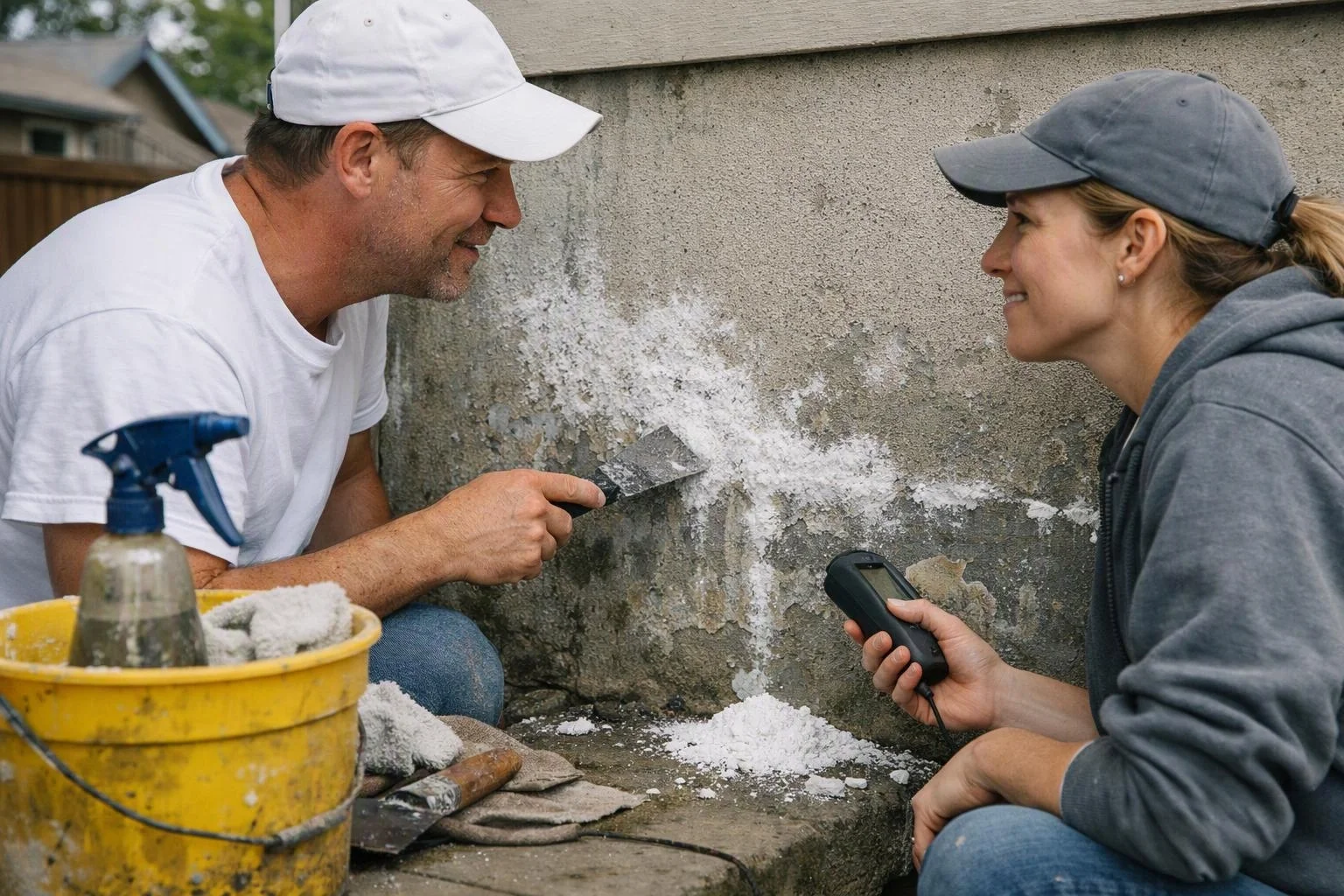
Efflorescence forms when moisture moves through porous masonry and carries dissolved salts. Water reaches the surface, then evaporates and leaves the salts behind. The result may look like a thin white film, loose powder, or a crusty patch.
Related glossary terms: Paint Adhesion, Surface Preparation, Pressure Washing.
Exterior painters check the surface before applying a coating. Loose residue can interfere with paint adhesion, so the surface needs cleaning and drying before painting. The source of the moisture also matters. Water may enter through cracked mortar, porous concrete, poor drainage, or an unsealed surface.
Efflorescence can return if moisture keeps moving through the material. A lasting repair may require surface preparation and correction of the water path before the finish coat is applied.
From the Thomas J. Painting team
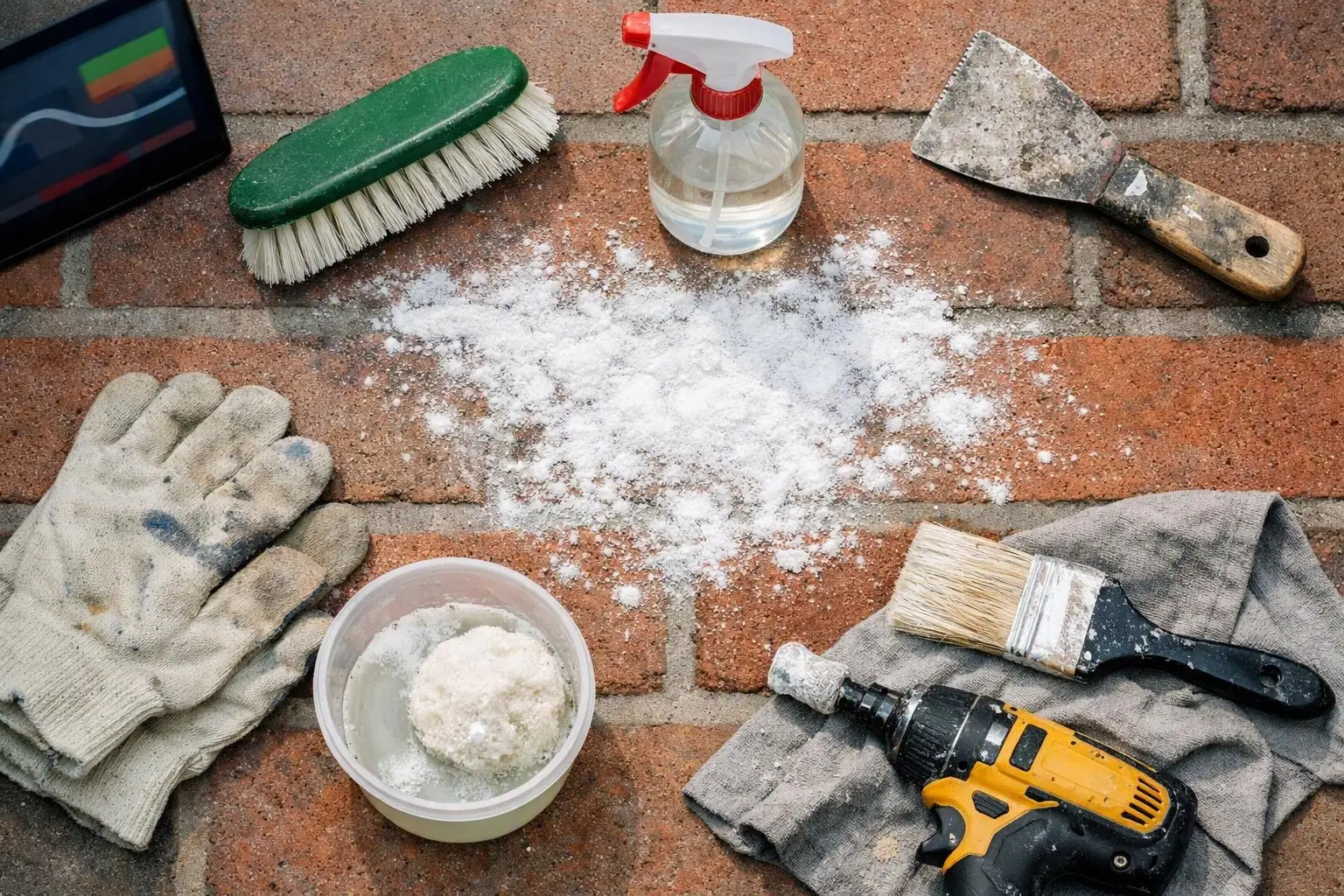
When we find efflorescence, we check the affected masonry and look for nearby moisture paths. We remove loose residue and let the surface dry before judging its condition. Our team also checks whether cracks, joints, or drainage details may allow the deposit to return after exterior painting.
Efflorescence in Practice: A Real-World Example
A stucco wall may show white powder near its lower edge after repeated wet weather. Before exterior house painting, the surface needs cleaning, drying, and a check for moisture entering from the ground or nearby joints.
Related Services
Related Terms
Paint Adhesion
Paint Adhesion is the bond between a coating and the surface beneath it. Strong adhesion helps…
Surface Preparation
Surface Preparation is the planned cleaning, repair, and conditioning of a surface before paint application. It…
Pressure Washing
Pressure Washing is a surface-cleaning method that uses a focused stream of water to remove dirt…
Mildew Resistant Paint
Mildew Resistant Paint is a coating made with additives that help slow mildew growth on painted…
Thomas J. Painting
Have Questions About Efflorescence?
Contact Thomas J. Painting for practical guidance on Efflorescence and related painting contractor work in Issaquah.