
What Is Chalking?
Chalking is a powdery residue that forms when paint binders break down at the surface. The residue can rub off on your hand or a cloth, and it may leave the coating dull or faded. Chalking often appears on exterior walls exposed to sunlight and weather, but surface preparation helps determine the proper repainting approach.
Quick Facts About Chalking
Category
Exterior paint condition
Used for
Assessing worn exterior coatings
Common confusion
Mistaken for ordinary dirt
Also called
Powdering paint
Often discussed with
Exterior House Painting
Key Takeaways About Chalking
- Chalking feels dusty and transfers to touch.
- Surface cleaning helps reveal the coating’s condition.
- Chalking is not the same as peeling paint.
How Chalking Works
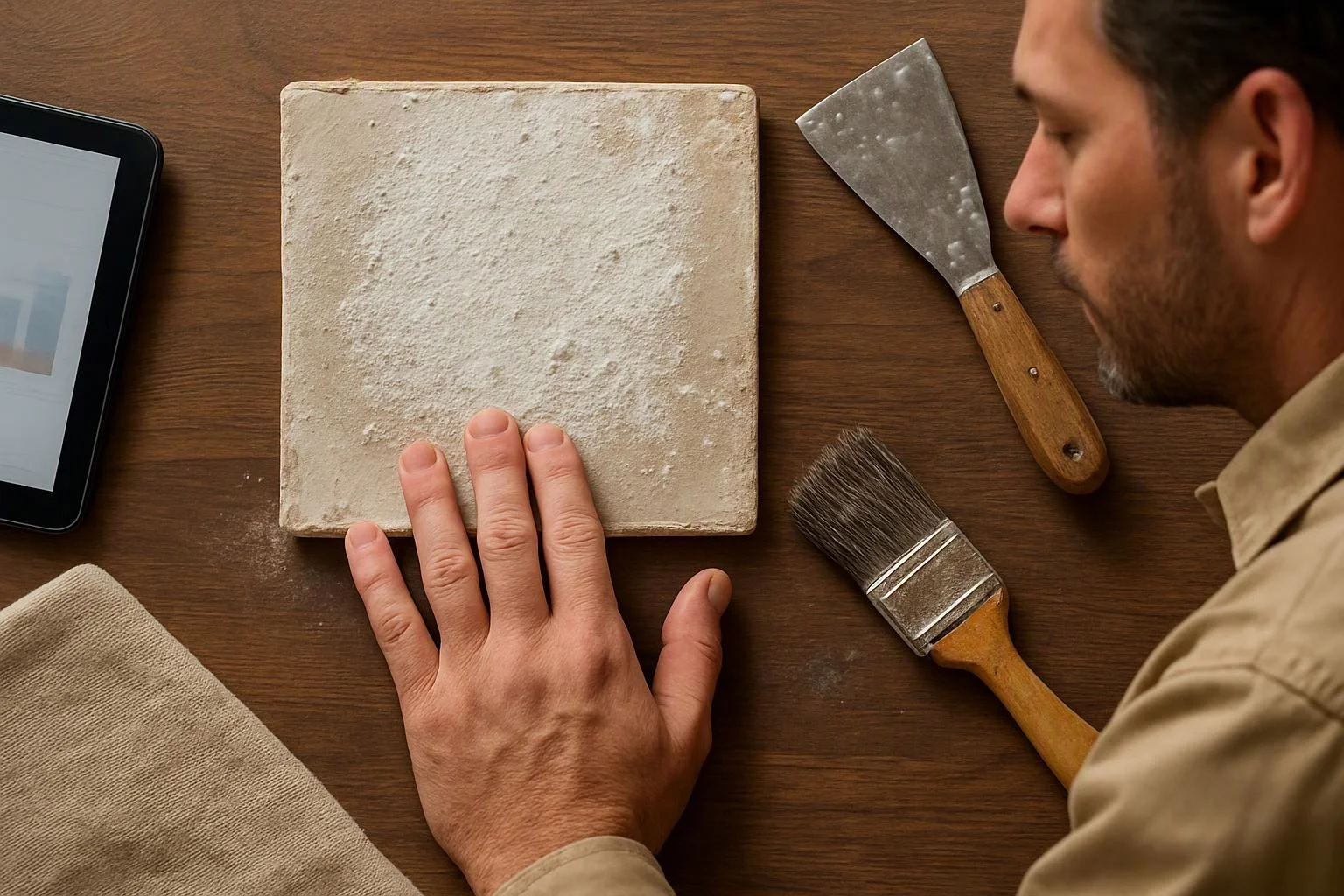
Chalking starts when sunlight and weather break down the binder that holds paint pigments together. Loose pigment remains at the surface as a fine, dusty film. A hand or cloth may pick up the residue during a simple surface check.
Related glossary terms: Paint Adhesion, Peeling Paint, Pressure Washing.
Light chalking may need thorough cleaning before new paint is applied. Heavy chalking can weaken adhesion, so the surface may need extra preparation. Paint adhesion depends on removing loose residue and checking whether the existing coating remains sound.
What Chalking Looks Like on a House
Chalking often appears as a faded area with a powdery feel. The residue may be white, pale, or close to the paint color. Exterior walls with strong sun exposure commonly show the condition sooner than shaded areas.
From the Thomas J. Painting team
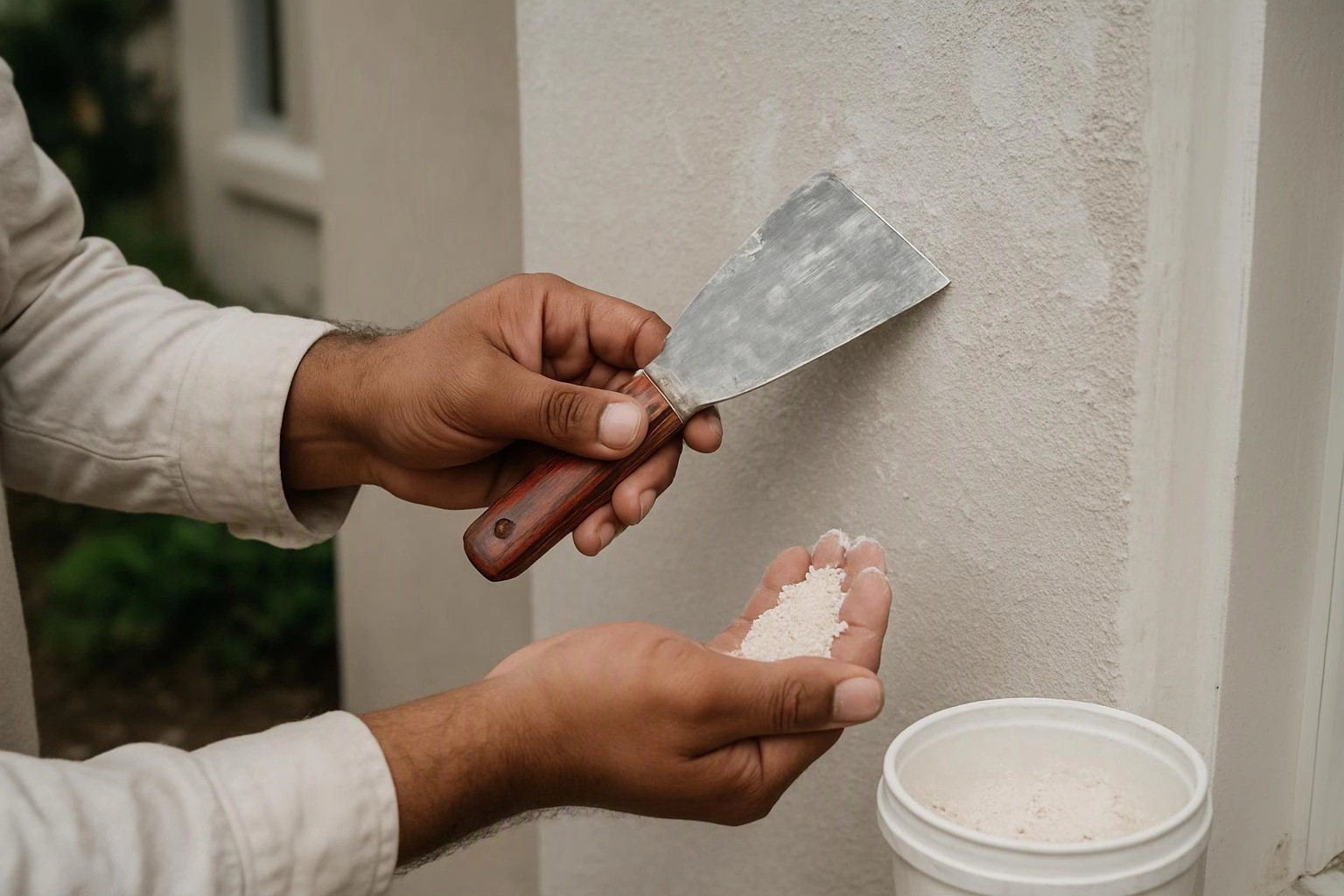
When we inspect an exterior surface, we wipe several areas to check for loose pigment and uneven chalking. We also look for peeling, cracking, or bare spots because those conditions call for different preparation. Our team uses the surface condition to guide cleaning and coating decisions.
Chalking in Practice: A Real-World Example
A painted siding wall in Issaquah may leave a pale, dusty mark on a glove during preparation. The crew cleans the surface and checks for weak paint before applying a new exterior coating.
Related Services
Related Terms
Paint Adhesion
Paint Adhesion is the bond between a coating and the surface beneath it. Strong adhesion helps…
Peeling Paint
Peeling Paint is a surface failure that occurs when a paint film loses its bond and…
Pressure Washing
Pressure Washing is a surface-cleaning method that uses a focused stream of water to remove dirt…
Surface Preparation
Surface Preparation is the planned cleaning, repair, and conditioning of a surface before paint application. It…
Thomas J. Painting
Have Questions About Chalking?
Contact Thomas J. Painting for practical guidance on Chalking and related painting contractor work in Issaquah.