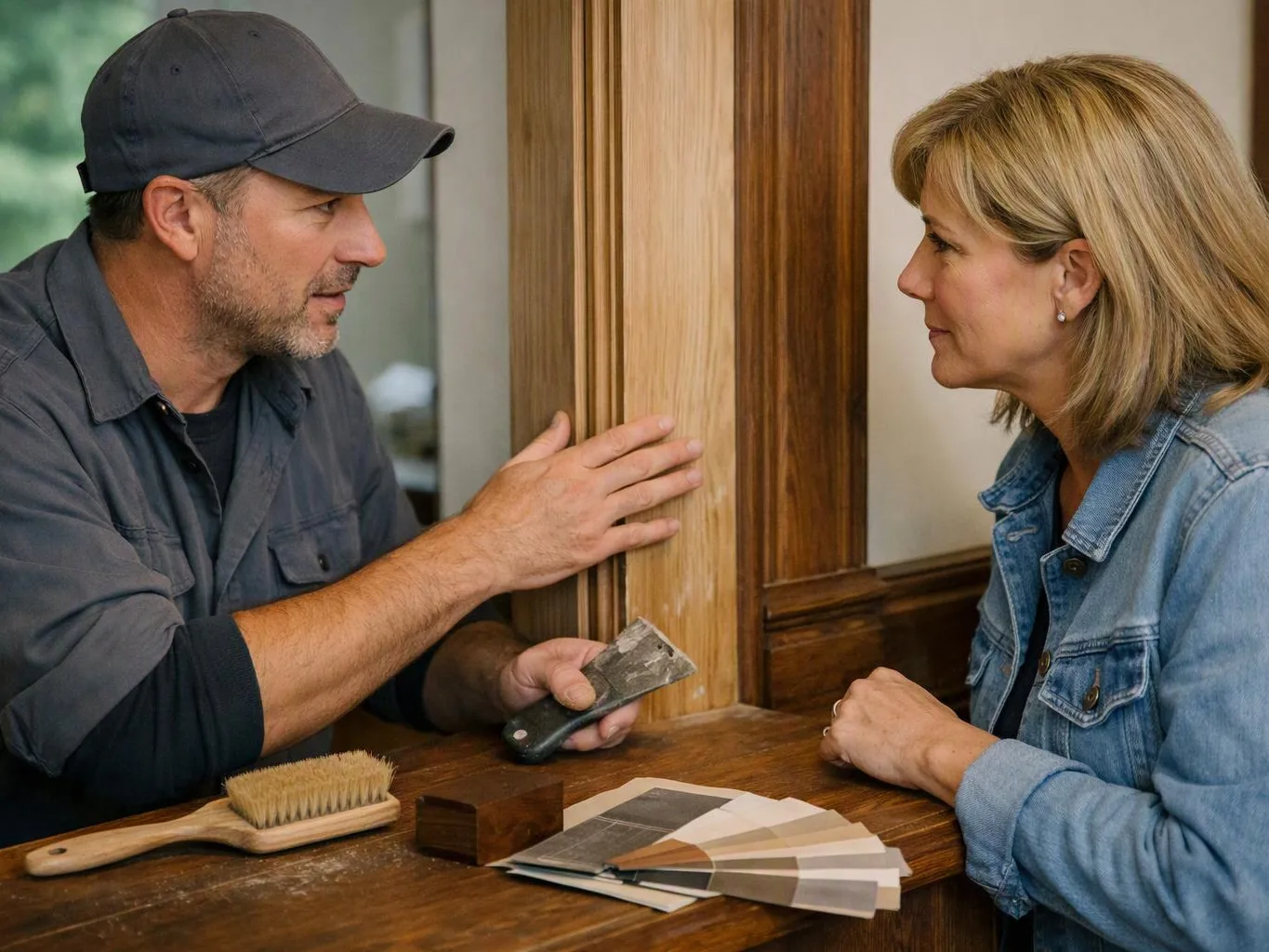
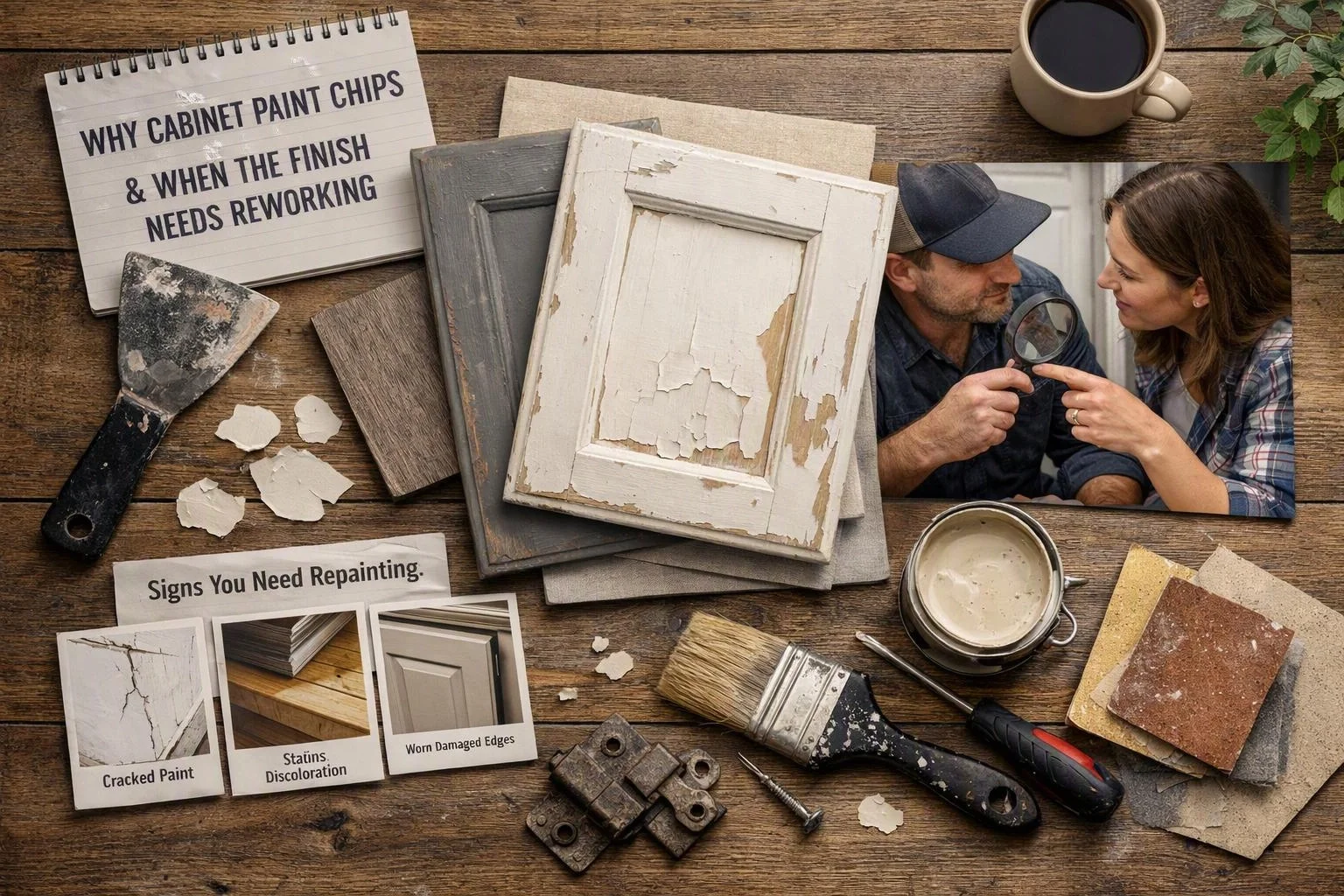
Why Cabinet Paint Chips and When the Finish Needs Reworking
Cabinet paint needs repainting when chips, peeling, exposed material, or widespread wear show that touch-ups won't hold. PainterIssaquahwa.com checks the surface, removes failing paint, prepares the cabinet, and rebuilds the finish. At PainterIssaquahwa.com, we focus on the causes of failure so the new coating can bond properly.
Get a Free EstimateWhat Cabinet Paint Failure Looks Like
Cabinet paint failure happens when the coating loses its bond with the cabinet surface. The finish may show small paint chips, peeling paint, cracked paint, or a flaking finish.
A wood cabinet can also show exposed wood when the paint layer breaks away. Poor paint adhesion often causes damage around edges, corners, and areas that receive repeated use.
Cleaning may remove surface dirt, but cleaning alone won't rebuild a failing cabinet finish. When damage keeps spreading, the surface usually needs careful repair and new coating.
Signs Your Cabinet Paint Needs Repainting
Cabinet paint needs repainting when damage is widespread, keeps returning, or exposes the cabinet surface.
One small mark doesn't always mean the whole finish has failed. These warning signs help separate a stable spot repair from a larger cabinet repaint.
Why Paint Chips Off Cabinets
Cabinet paint chips when grease, moisture, friction, or weak preparation prevents the coating from staying bonded.
Surface preparation controls how well new paint grips the cabinet. Dust, old residue, smooth areas, and loose coating can weaken paint adhesion.
Cabinet cleaning removes some buildup, but heavy grease may need focused degreasing. Moisture exposure and humidity can also affect the cabinet material and paint layer.
Friction adds another source of wear. Doors, edges, handles, and hinges receive repeated contact, so weak spots become visible there first.
Can Grease Cause Cabinet Paint to Fail?
Yes, grease can cause cabinet paint to fail because residue blocks strong adhesion and attracts repeated handling.
Kitchen grease often collects around cabinet doors and cabinet handles. If grease remains under the coating, new paint may bond to the residue instead of the clean surface.
Our team checks for grease buildup before painting. We use degreasing and other preparation steps when residue could affect paint adhesion.
Why Paint Peels Near Handles and Hinges
Paint peels near cabinet handles and hinges because high-touch areas face repeated handling, door movement, and mechanical friction.
Handles collect skin oils and kitchen residue. Hinges transfer movement through the door, while edges receive contact when doors open and close.
Edge wear can expose a weak bond faster than broad, untouched areas. A lasting repair must address both the visible peeling and the surface condition beneath it.
When a Touch-Up Can Fix Chipped Cabinet Paint
A paint touch-up can work when the chip is small, the surrounding paint is firmly bonded, and the color and sheen match.
A stable coating around a small chip gives a spot repair a sound edge. Matching paint also helps the repair blend with the existing cabinet finish.
You can consider a small touch-up when the damage is isolated and the cabinet surface remains clean and firm. If the repair flakes again, the surrounding finish may need more preparation.
When Cabinet Paint Needs More Than Spot Repair
Cabinet paint needs more than spot repair when loose coating, poor adhesion, or mismatched touch-ups spread across doors or frames.
Full cabinet repainting may be needed when widespread peeling reaches several surfaces. Our team removes loose paint, repairs damaged areas, and prepares the cabinet before applying new coating.
Cabinet doors and cabinet frames can age differently. We review both areas so the final finish has a consistent color, sheen, and smooth surface.
Primer can help create a sound base when the surface needs extra bonding support. The right repair scope depends on the finish condition, not only the largest visible chip.
How We Rework a Failing Cabinet Finish
We rebuild a failing cabinet finish by checking the cause, preparing the surface, and inspecting the new coating.
Our Cabinet Painting service is suited to isolated repairs and larger finish reworking. We match the preparation to the condition of the cabinet.
DIY Touch-Ups or Professional Cabinet Reworking?
You can handle a small, stable chip, while our team handles widespread failure and full finish reworking.
The main difference is the condition beneath the visible damage. A small repair may need paint matching, while broad failure needs deeper surface preparation.
| Factor | What you can do yourself | What we do |
|---|---|---|
| Damage size | Address an isolated chip on a stable coating. | Assess widespread chips, peeling, and loose paint. |
| Surface preparation | Clean the area and check that nearby paint feels firm. | Use cleaning, sanding, repair, and primer as the surface requires. |
| Paint matching | Try to match the existing color and sheen. | Plan the finish across affected cabinet doors and frames. |
| Cabinet repainting | Limit work to a small spot when the coating is stable. | Rework the finish when spot repairs won't hold. |
What We Check Before Repainting Cabinets
We check paint adhesion, grease buildup, moisture damage, cabinet material, and finish condition before recommending cabinet repainting.
Our team looks for loose layers and signs that moisture has affected the cabinet material. We also review edges, handles, hinges, doors, and frames for repeated wear.
The repair scope depends on how far the failure has spread. We use those findings to plan surface preparation, primer, paint matching, and the final finish.
How to Request a Cabinet Painting Estimate
PainterIssaquahwa.com provides Free Estimates Available, with the estimate shaped by cabinet condition, preparation needs, and finish scope.
Tell us which cabinet doors, frames, and edges show damage. Photos or an in-person review can help us understand the affected surfaces and likely preparation.
We consider the condition of the existing coating, the amount of surface preparation, and the desired paint finish. Request an estimate through our contact page.
Related Resources
What to Do About Chipped or Peeling Cabinet Paint
Compared ToCabinet Painting or Replacement: Which Project Fits Your Kitchen?
Compared ToPhone, Virtual, or On-Site Painting Estimates: Which Should You Choose?
How It WorksCabinet Painting and Refacing Process: From Preparation to Final Finish