What to Do About Chipped or Peeling Cabinet Paint
Chipped and peeling cabinet paint should be assessed for adhesion, moisture, surface damage, and wear before touch-ups begin. Thomas J. Painting checks the cabinet surface, explains the repair options, and offers Free Consultations.
Get a Free EstimateWhat Chipped and Peeling Cabinet Paint Looks Like
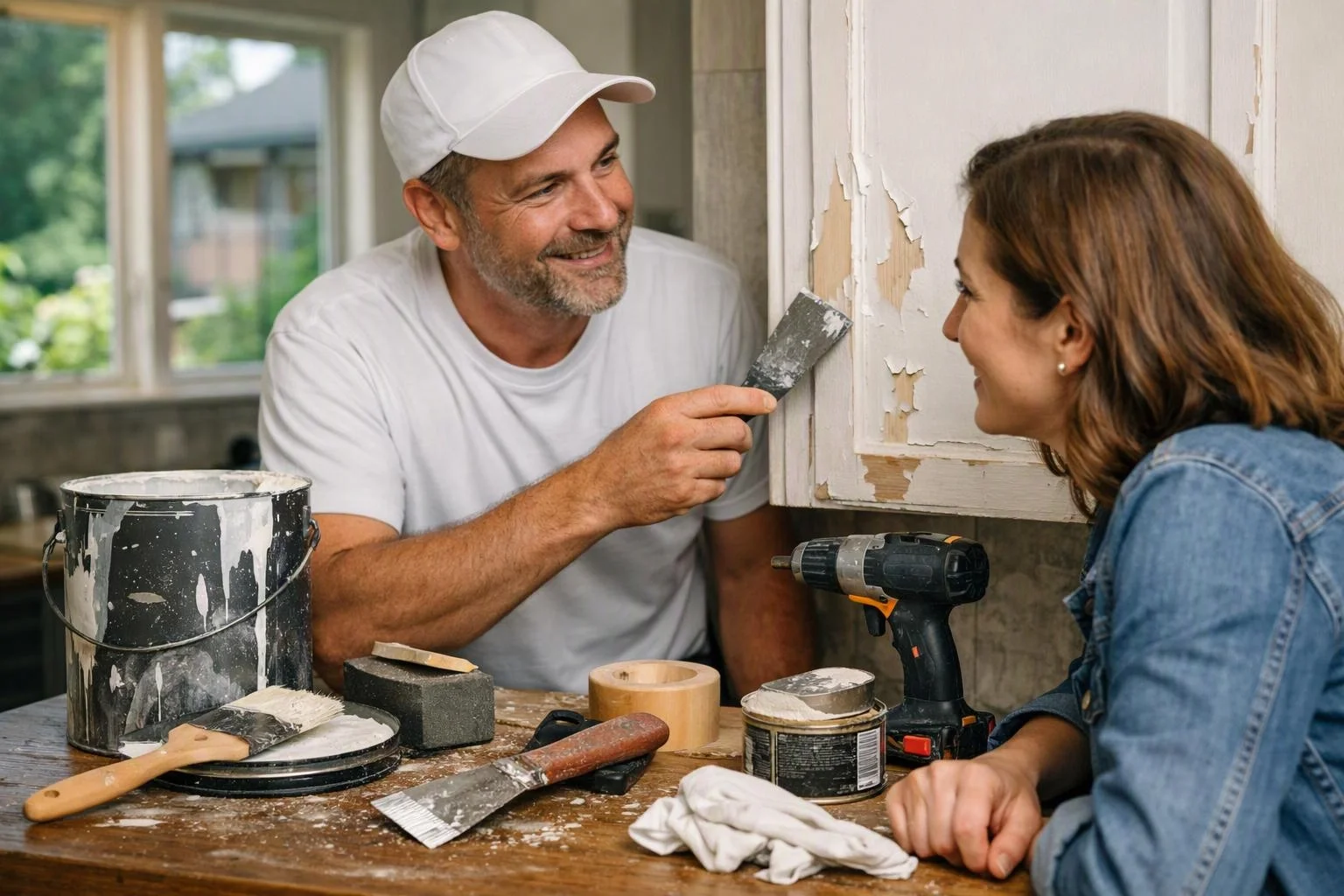
Chipped cabinet paint can begin as a small mark and grow with daily use. We inspect the damaged paint layer before choosing a repair method.
Common signs include the following:
Why Is Paint Chipping Off Your Cabinets?
Cabinet paint commonly chips when the surface wasn't cleaned, prepared, or coated for strong adhesion. We look for the cause before repairing damaged paint.
Poor paint adhesion is a common cause, but cabinet paint failure can have several sources. Our team checks the surface and surrounding conditions together.
How to Tell Whether Cabinet Paint Needs a Touch-Up or Full Repainting
Cabinet paint can be touched up when damage is small and the surrounding coating remains firmly attached. We assess both the damaged spot and the nearby paint before recommending cabinet repainting.
Localized damage may suit a paint touch-up, while widespread peeling often needs broader surface preparation.
| Condition | Likely approach | What we assess |
|---|---|---|
| Small edge chips with firm surrounding paint | Localized paint touch-up | Color, sheen, edge condition, and paint adhesion |
| Peeling across part of one door or frame | Expanded repair and recoating | Loose paint, substrate condition, and preparation needs |
| Widespread peeling across cabinet doors and frames | Cabinet repainting or refinishing | Coating failure, material, moisture, and the full coating system |
Touch-ups may not hold when loose paint surrounds the repair. We remove unstable material so the new cabinet coating has a sound surface.
How We Repair Chipped and Peeling Cabinet Paint
Thomas J. Painting repairs cabinet paint by checking the damage, removing loose coating, preparing the surface, and applying compatible coatings. Our process is designed to address the cause of the paint failure.
Cabinet painting may form part of a wider Cabinet Painting project when several surfaces need attention.
What We Check Before Repainting Cabinets
Paint adhesion shows whether the existing coating can support another layer. We test the surrounding surface by looking for lifting edges, soft spots, and loose paint.
Moisture damage can keep peeling cabinet paint from staying fixed. We inspect areas near sinks and dishwashers, then consider wood movement and the overall substrate condition.
Grease can remain on kitchen cabinets even after light cleaning. We use suitable cleaning and degreasing steps before sanding and primer work.
How to Prevent Cabinet Paint From Peeling Again
Cabinet paint lasts better when cleaning, moisture control, and surface preparation support the coating system. We explain the care steps that match the repaired finish.
Prevention focuses on reducing stress around the paint layer:
What Changes the Cost of Repairing Cabinet Paint?
Cabinet paint repair cost depends on the damaged area, preparation required, cabinet material, and coating work involved. We review these factors before preparing a cabinet painting quote.
Damage extent affects how much loose coating must be removed. The number of cabinet components also matters, especially when both doors and frames need work.
Surface preparation can include cleaning, degreasing, sanding, and surface repair. The coating system also affects the work because primer and finish coats must work together.
Contact us for an exact quote based on your cabinets. Our Free Consultations help us explain the repair scope and what the quote includes.
When Should You Get Help With Peeling Cabinet Paint?
Cabinet painting help makes sense when peeling is widespread, returns after touch-ups, or reveals deeper surface damage. We inspect the coating failure and identify the preparation needed.
Repeated paint failure can point to poor adhesion, moisture damage, or an unsuitable coating system. Our team can assess whether cabinet restoration or cabinet painting fits the condition.
Get help when peeling affects several cabinet doors, spreads across cabinet frames, or exposes damaged material. You can contact Thomas J. Painting to discuss the repair and request a quote.
Contact Thomas J. Painting for a Free Consultation.
Get a Free EstimateQuestions About Chipped and Peeling Cabinet Paint
Can I paint over peeling cabinet paint?
No, painting over loose coating usually leaves the adhesion problem in place. Thomas J. Painting removes unstable paint, prepares the surface, and applies compatible coatings.
Why does cabinet paint peel near the sink?
Cabinet paint often peels near the sink because moisture reaches the paint layer and weakens its bond. We check the cabinet material, nearby seams, and surface preparation before repairing the area.
Do cabinets need primer after chipped paint is removed?
Cabinets often need primer after chipped paint is removed, especially when the surface is exposed, porous, stained, or difficult to coat. We select primer based on the cabinet material and the planned finish.
How can I match a touch-up to existing cabinet paint?
Matching a cabinet paint touch-up requires checking the color, sheen, age, and surrounding paint condition. We assess the existing coating because a close color match may still look different when the sheen does not match.