
What Is Sanding?
Sanding is a surface preparation process that uses abrasive material to remove loose paint, smooth rough areas, and improve adhesion. The process may expose bare wood, reduce raised edges, or clear residue left after paint stripping. Proper sanding creates an even surface without removing more sound material than the job requires.
Quick Facts About Sanding
Category
Surface preparation
Used for
Smoothing and coating removal
Common confusion
Not the same as chemical stripping
Also called
Abrasive sanding, Surface sanding
Often discussed with
Paint stripping service
Key Takeaways About Sanding
- Sanding uses abrasion, not chemicals, to change a surface.
- The goal is a clean, even surface with sound material underneath.
- Sanding isn't the same as stripping paint from every surface.
How Sanding Works

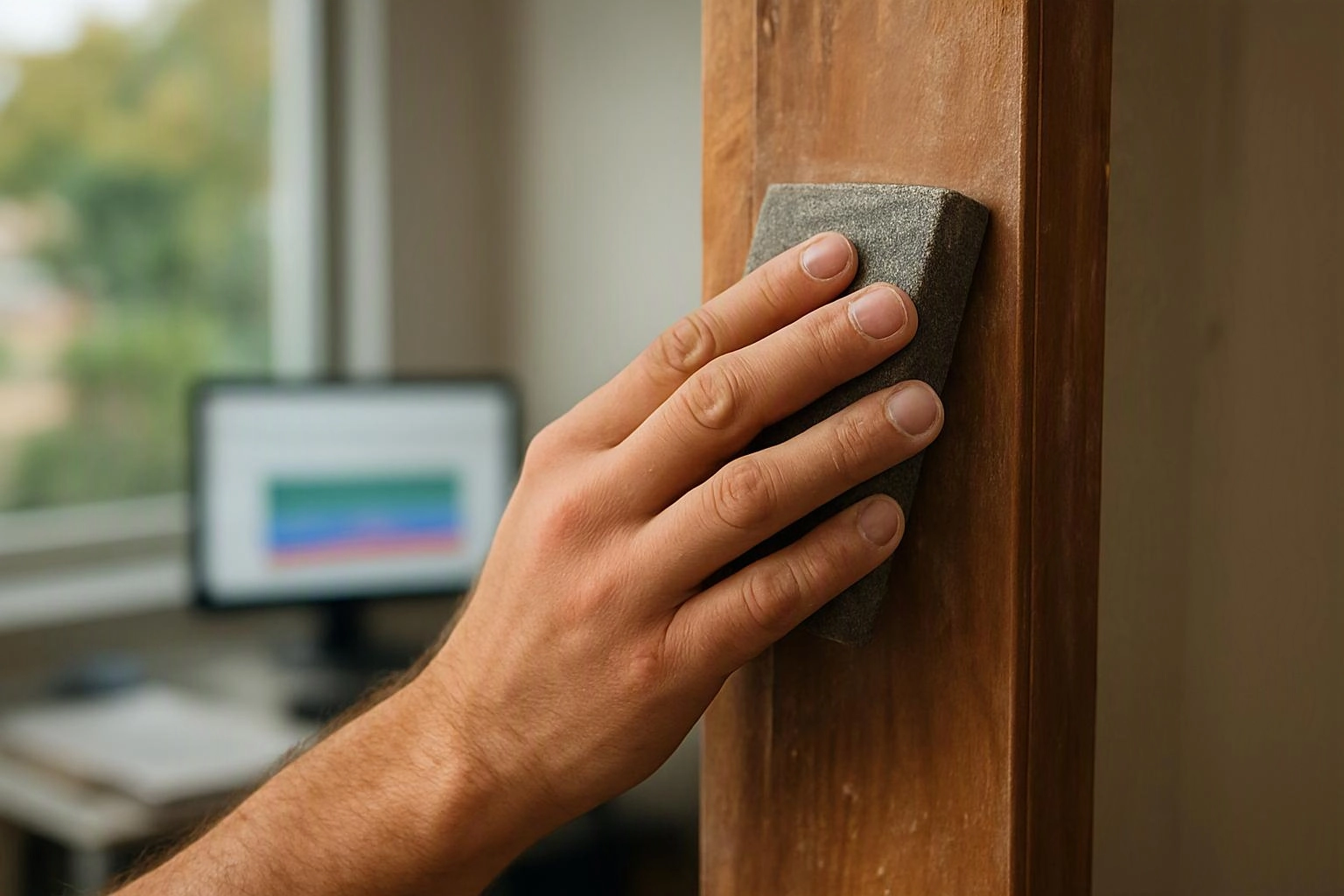
Sanding uses abrasive paper, pads, or discs to wear down a surface. The abrasive cuts through rough spots, loose coating edges, and small surface marks. The worker changes the abrasive method based on the surface and the coating.
Related glossary terms: Surface Preparation, Paint Adhesion, Chemical Stripper.
After paint stripping, sanding helps remove leftover residue and smooths the boundary between bare material and remaining sound coating. The surface is checked by touch and sight as work continues. Dust must be cleared before primer or paint is applied, because loose dust can weaken the new coating.
Surface preparation may also include scraping, cleaning, or filling damaged areas. Sanding supports these tasks, but it does not repair deep damage or replace a suitable stripper when thick paint covers the surface.
From the Thomas J. Painting team
When we handle paint stripping, we sand only after loose coatings and stripper residue are addressed. We check the surface for rough edges, exposed areas, and remaining dust. Our team adjusts the sanding method to protect sound wood or other materials while preparing the surface for its next coating.
Sanding in Practice: A Real-World Example
A homeowner may have peeling paint on an exterior wood trim surface. During paint stripping, sanding can smooth the remaining paint edges and remove residue before the trim receives primer and paint.
Related Services
Related Terms
Surface Preparation
Surface Preparation is the planned cleaning, repair, and conditioning of a surface before paint application. It…
Paint Adhesion
Paint Adhesion is the bond between a coating and the surface beneath it. Strong adhesion helps…
Chemical Stripper
A chemical stripper is a coating-removal product that softens or breaks down old paint, varnish, or…
Peeling Paint
Peeling Paint is a surface failure that occurs when a paint film loses its bond and…
Thomas J. Painting
Have Questions About Sanding?
Contact Thomas J. Painting for practical guidance on Sanding and related painting contractor work in Issaquah.