
What Is Roller NAP?
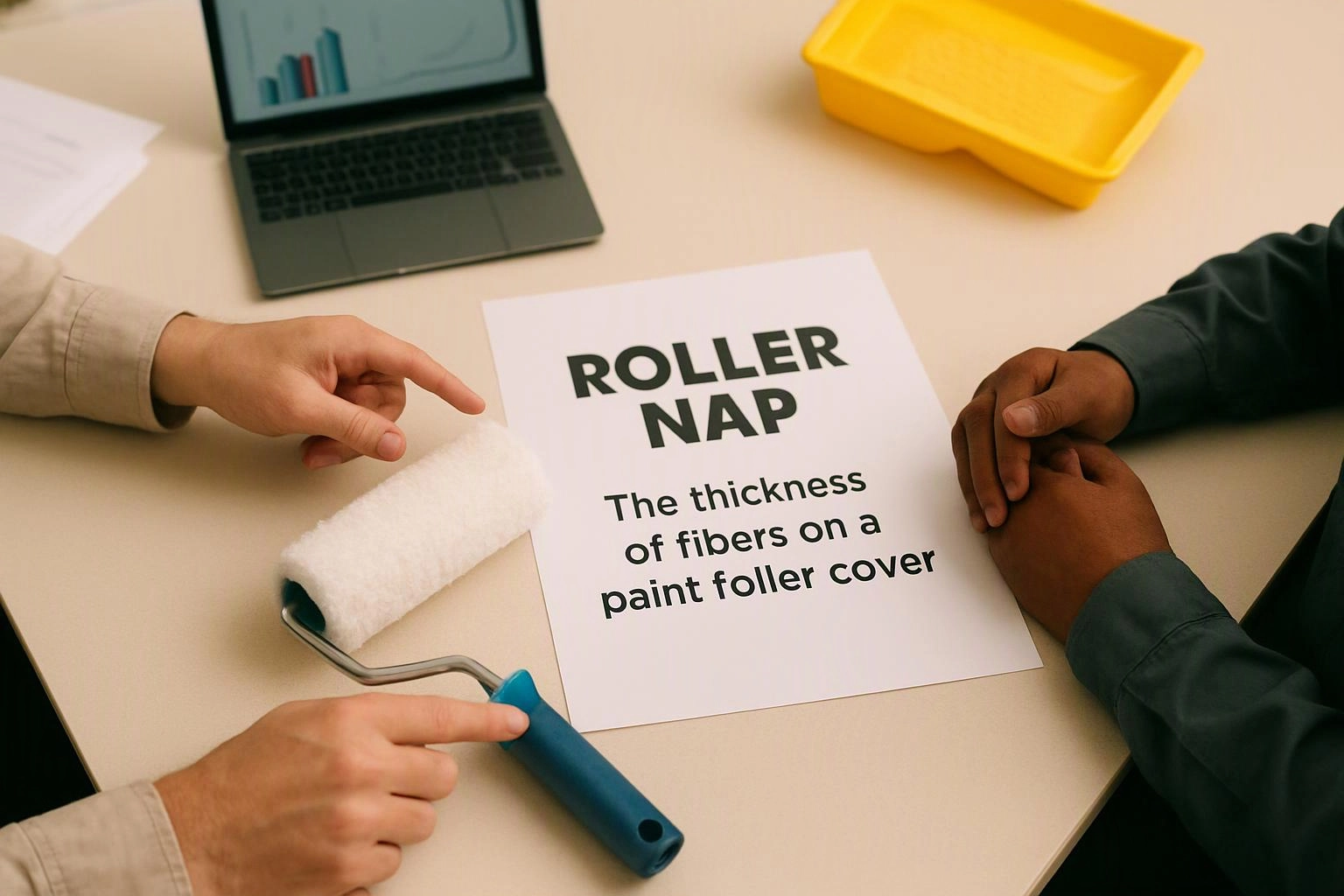
Roller nap is the thickness of fibers on a paint roller cover. The nap holds paint and releases it onto a surface. Shorter nap suits smooth walls, while longer nap reaches into textured surfaces. Choosing the right nap helps control coverage, texture, and the amount of paint left behind.
Quick Facts About Roller NAP
Category
Painting tool feature
Used for
Matching rollers to surfaces
Common confusion
Confused with paint sheen
Also called
Nap Thickness, Roller cover nap
Often discussed with
Interior House Painting
Key Takeaways About Roller NAP
- Nap length changes the roller’s paint capacity.
- Smooth walls usually need a shorter nap.
- Nap is not the same as paint sheen.
How Roller NAP Works
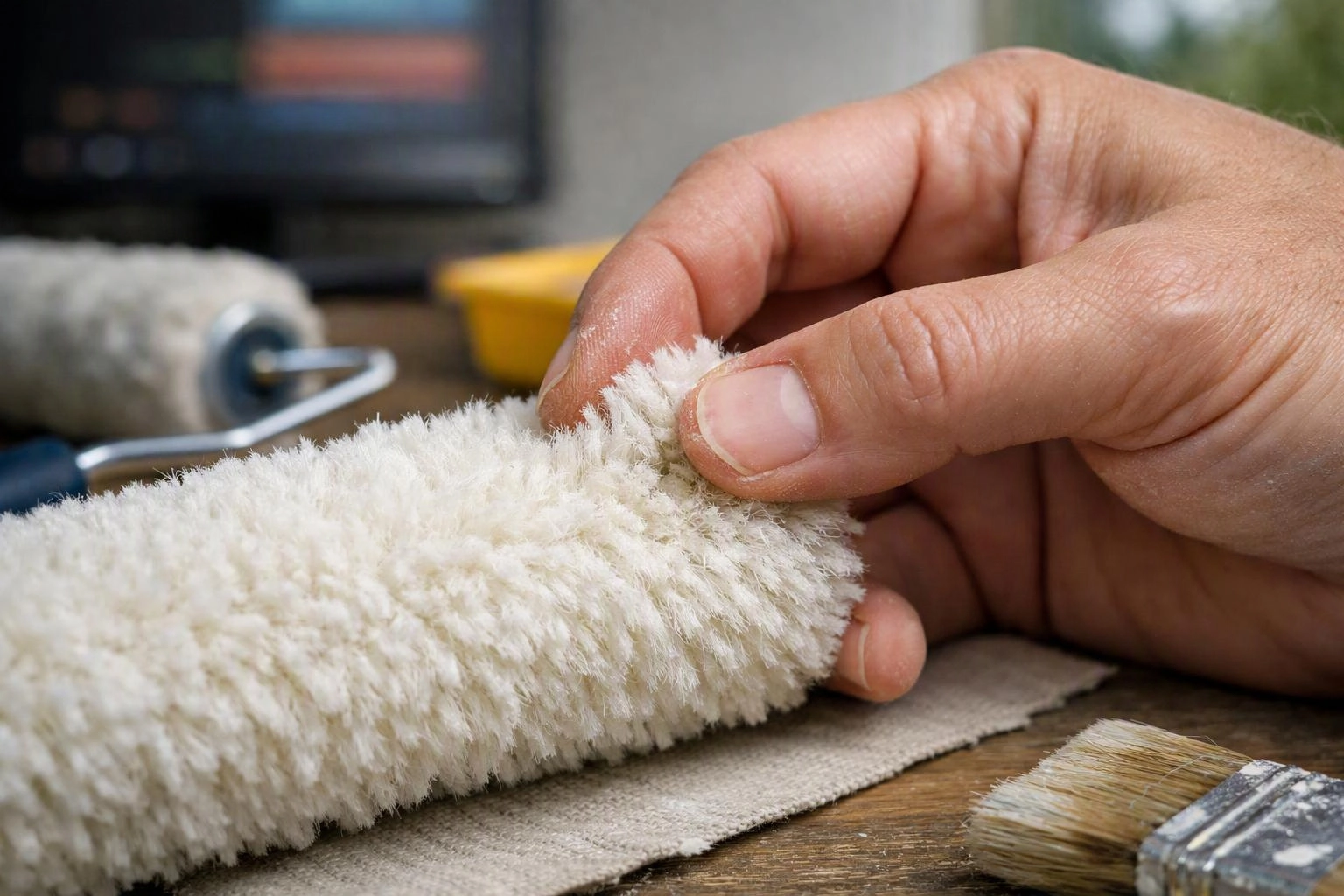
Roller nap describes the fiber depth on a roller cover. The fibers hold paint as the roller moves across a wall. Short fibers spread paint with less surface texture. Longer fibers carry more paint and reach into uneven areas.
Related glossary terms: Paint Sheen, Surface Preparation, Back-Rolling.
Paint roller covers are selected based on the wall’s surface. A smooth wall often works well with a short nap. Lightly textured drywall may need a medium nap. Heavy texture can call for a longer nap so the paint reaches recessed areas.
Nap also affects the finish left behind. A longer nap can create more visible texture, especially with thin paint or strong lighting. The roller cover should stay evenly loaded, since excess paint can cause drips and uneven marks.
Expert Note
When we prepare an interior wall, we check its texture and condition before choosing a roller cover. We also watch how the cover releases paint during the first passes. Our team changes the nap when the surface needs better coverage or leaves too much texture.
Roller NAP in Practice: A Real-World Example
For an interior house painting project with smooth drywall, we may choose a shorter nap for an even wall finish. A textured ceiling or rough wall may need a deeper nap to reach low areas.
Related Services
Related Terms
Paint Sheen
Paint Sheen is the level of shine a dried paint film shows under light. Sheen affects…
Surface Preparation
Surface Preparation is the cleaning, repair, and conditioning of a surface before paint or coating is…
Back-Rolling
Back-Rolling is a paint application method that uses a roller after spraying to press fresh coating…
Lap Marks
Lap Marks are visible bands or shade changes where wet paint overlaps paint that has started…
PainterIssaquahwa.com
Have Questions About Roller NAP?
Contact PainterIssaquahwa.com for practical guidance on Roller Nap and related painting contractor work in Issaquah.