
What Is Masking?
Masking is a paint preparation process that covers or shields surfaces from unwanted paint, primer, dust, or spray. Painters use tape, paper, plastic, or other protective materials around edges, fixtures, floors, windows, and equipment. Good masking creates clean boundaries and helps protect areas that should keep their existing finish.
Quick Facts About Masking
Category
Paint preparation
Used for
Surface protection and clean edges
Common confusion
Masking is not sanding or priming
Also called
Paint Masking
Often discussed with
Commercial Painting
Key Takeaways About Masking
- Masking protects surfaces that should not receive paint.
- Firm tape edges help prevent paint from bleeding underneath.
- Masking is not the same as surface preparation.
How Masking Works
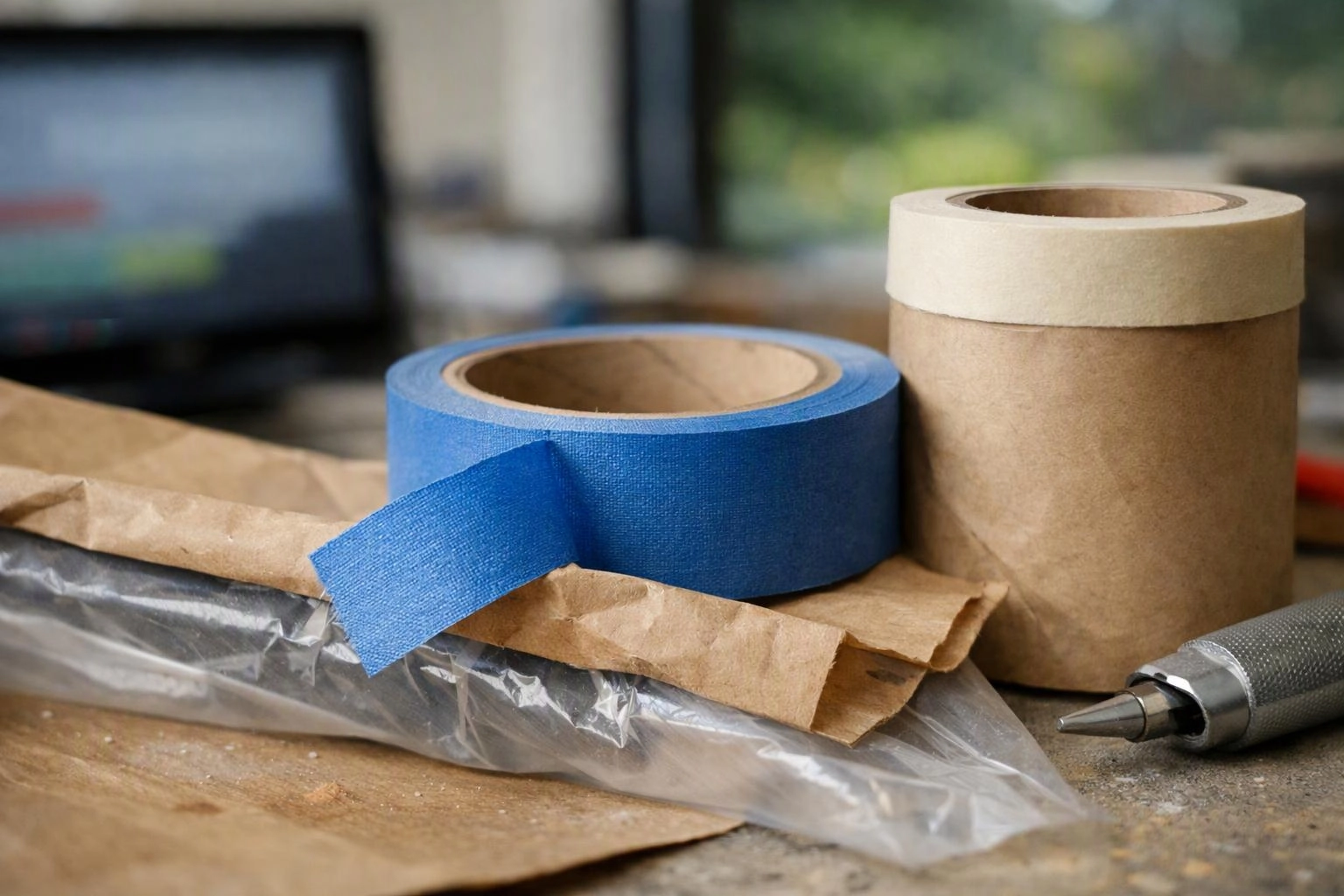
Masking shields nearby surfaces before paint is applied. A painter places tape along edges and covers larger areas with paper or plastic. The selected material depends on the surface, paint method, and risk of overspray.
Related glossary terms: Cutting In, Paint Sprayer, Surface Preparation.
Clean, dry surfaces help tape hold firmly. The painter presses the tape edge down so paint cannot spread beneath it. After painting, the protective materials are removed with care. Removing tape at the right stage helps keep the edge sharp without lifting fresh paint.
Painter's tape works well for many straight edges, while masking film can cover fixtures or broad areas. In commercial spaces, masking may protect floors, glass, trim, cabinets, signs, and equipment that must stay in place.
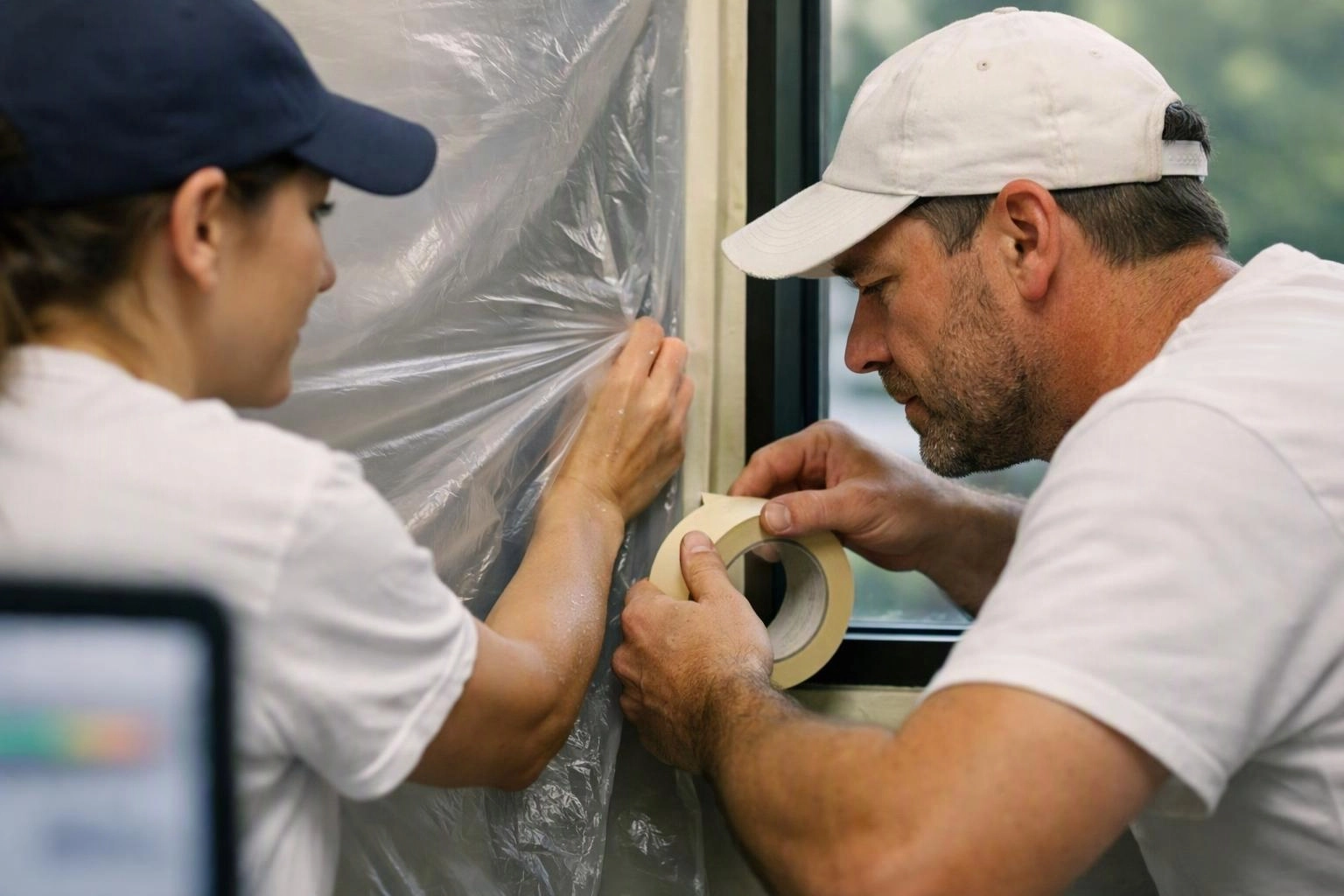
From the Thomas J. Painting team
When we mask a commercial space, we check the surface condition before placing tape or protective covering. We press edges firmly, protect nearby fixtures, and inspect the work area before spraying or rolling. We also remove masking carefully so fresh coatings and finished edges stay intact.
Masking in Practice: A Real-World Example
A commercial office may need its glass doors, carpet, trim, and built-in fixtures protected during painting. The painting crew masks those areas before applying coatings to the walls, then removes the coverings after the paint has set enough to keep the edges clean.
Related Services
Related Terms
Cutting In
Cutting in is the hand-painted process of creating a clean edge where two painted surfaces meet…
Paint Sprayer
A paint sprayer is a powered tool that turns liquid coating into a fine spray for…
Surface Preparation
Surface Preparation is the planned cleaning, repair, and conditioning of a surface before paint application. It…
Paint Adhesion
Paint Adhesion is the bond between a coating and the surface beneath it. Strong adhesion helps…
Thomas J. Painting
Have Questions About Masking?
Contact Thomas J. Painting for practical guidance on Masking and related painting contractor work in Issaquah.