
What Is Acrylic Paint?
Acrylic Paint is a water-based coating made with acrylic resin, color pigments, and other additives. It dries as water leaves the coating and the resin forms a durable film. Interior painters use acrylic paint on drywall, wood trim, doors, and other prepared surfaces because it offers flexible color and easy cleanup.
Quick Facts About Acrylic Paint
Category
Water-based coating
Used for
Walls, trim, doors, and ceilings
Common confusion
House paint is not the same as artist acrylic paint
Also called
Acrylic coating, Water-based acrylic paint
Often discussed with
Interior House Painting
Key Takeaways About Acrylic Paint
- Its water-based formula supports simple cleanup.
- Good surface preparation still controls the final result.
- Acrylic paint isn't the same as craft paint.
How Acrylic Paint Works
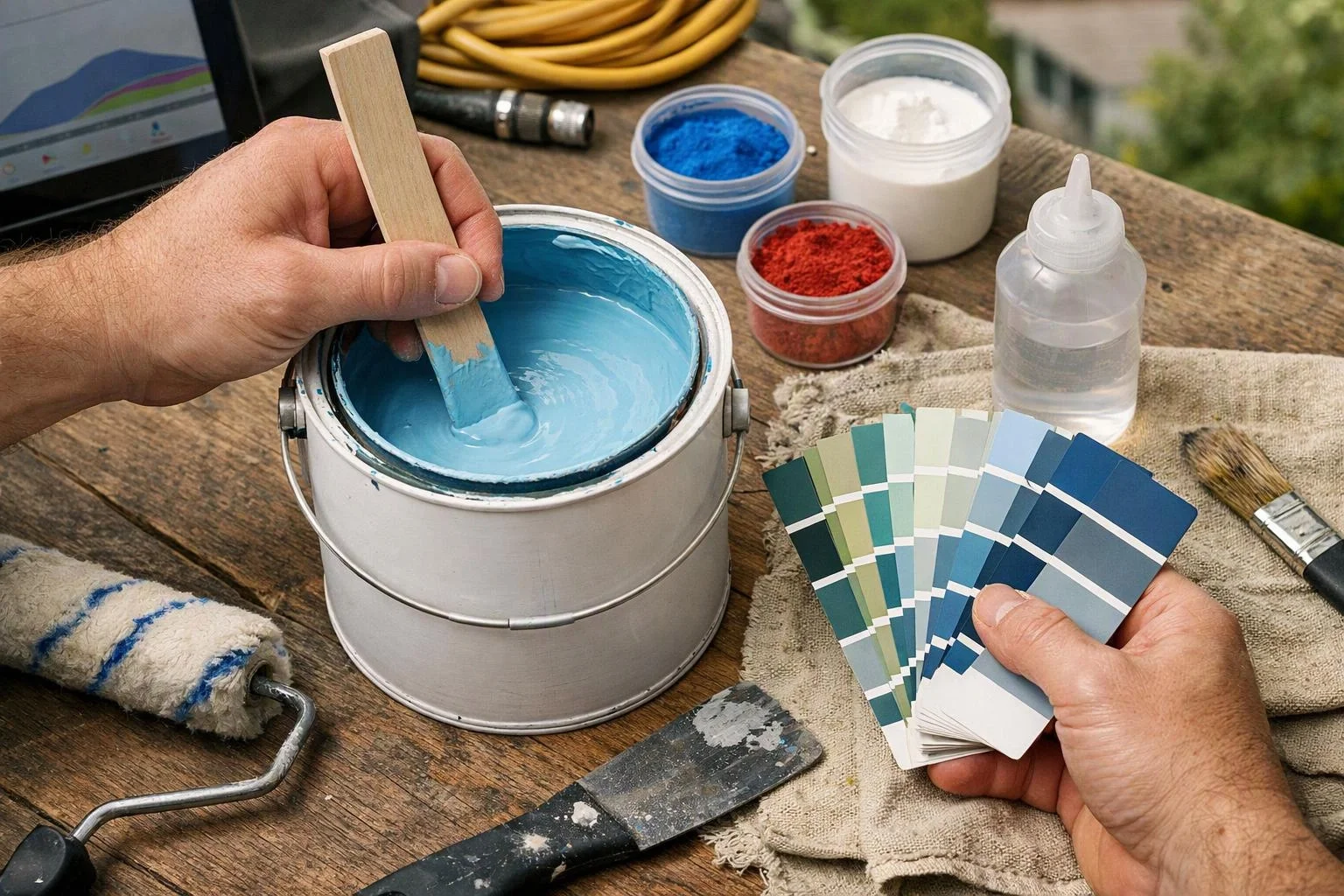
Acrylic paint spreads as a liquid and dries when water leaves the coating. Acrylic resin remains behind and forms a film that holds the pigments in place. The result is a colored surface that can handle normal interior use.
Related glossary terms: Paint Primer, Paint Adhesion, Sheen.
Interior painters choose different acrylic formulas for walls, trim, doors, and ceilings. Sheen affects how the finished surface reflects light and shows marks. A clean, sound surface helps the coating bond, while dust, grease, or peeling layers can weaken adhesion.
On a typical interior house painting project, acrylic paint may cover drywall in a living room or wood trim around a door. Paint type, surface condition, and the desired sheen guide the selection.
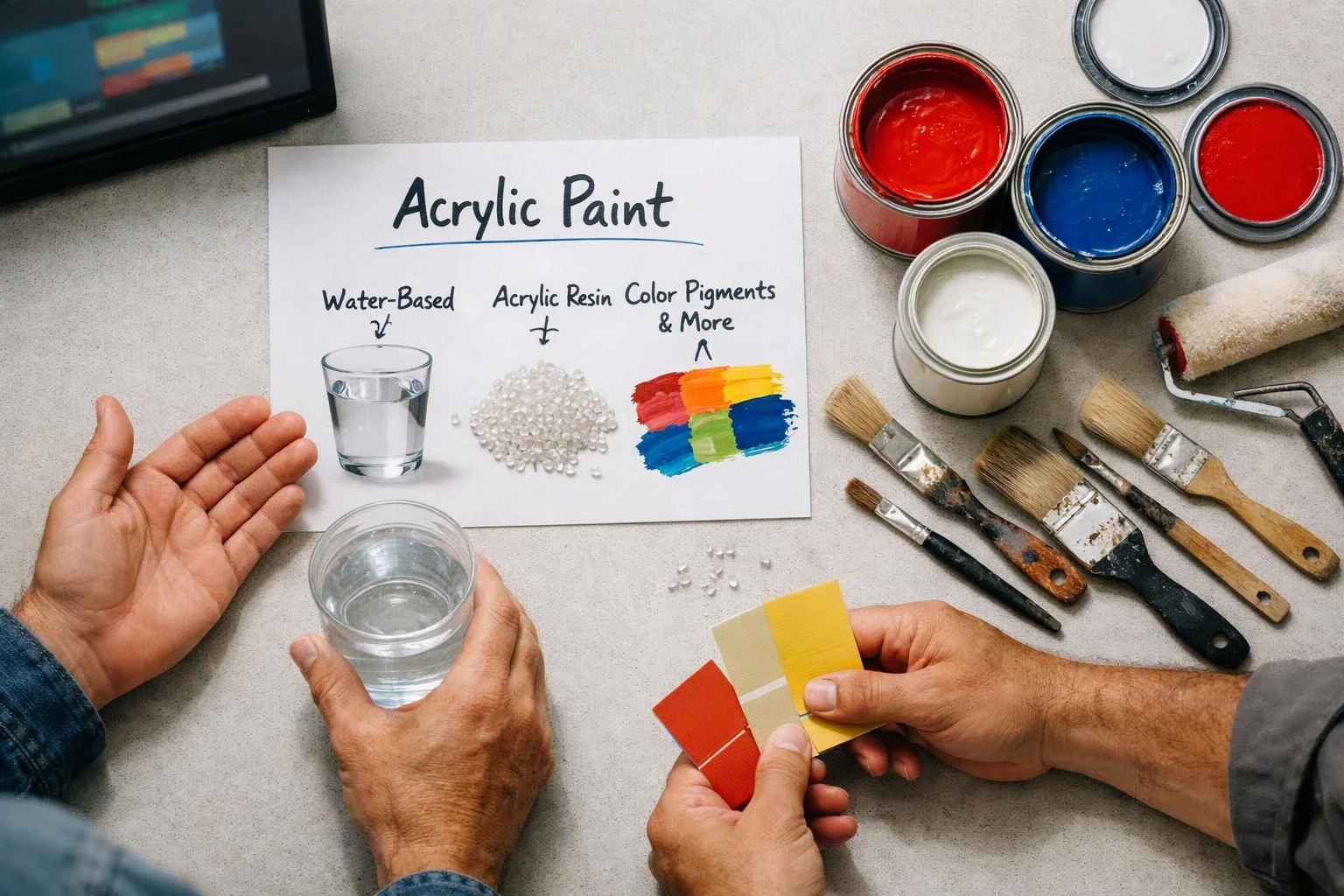
From the Thomas J. Painting team
When we use acrylic paint, we check the surface before choosing the coating. Our team looks for dust, grease, stains, peeling layers, and repairs that could affect adhesion. We also match the sheen to the surface, since trim and walls often need different finishes.
Acrylic Paint in Practice: A Real-World Example
A homeowner may choose acrylic paint for living room walls and wood door trim during an interior house painting project. The walls may use a washable low-sheen finish, while the trim may use a harder, smoother finish.
Related Services
Related Terms
Paint Primer
A Paint Primer is a preparatory coating that helps paint bond to a surface and creates…
Paint Adhesion
Paint Adhesion is the bond between a coating and the surface beneath it. Strong adhesion helps…
Sheen
Sheen is the level of shine that a dried paint film shows as light reflects from…
Surface Preparation
Surface Preparation is the planned cleaning, repair, and conditioning of a surface before paint application. It…
Thomas J. Painting
Have Questions About Acrylic Paint?
Contact Thomas J. Painting for practical guidance on Acrylic Paint and related painting contractor work in Issaquah.